

Bariatric meal plans are essential for those who have undergone weight loss surgery. They ensure you get the right nutrients while supporting your new lifestyle.
Navigating the dietary changes after bariatric surgery can be challenging. Your body now requires a balanced intake to promote healing and sustain weight loss. Free bariatric meal plans can be a valuable resource. They help you plan your meals without added stress or cost.
These plans are tailored to meet the unique needs of bariatric patients. They emphasize high protein, low sugar, and nutrient-rich foods. By following these meal plans, you can enjoy tasty, healthy meals that support your weight loss journey. Dive in to discover the benefits and simplicity of free bariatric meal plans designed just for you.
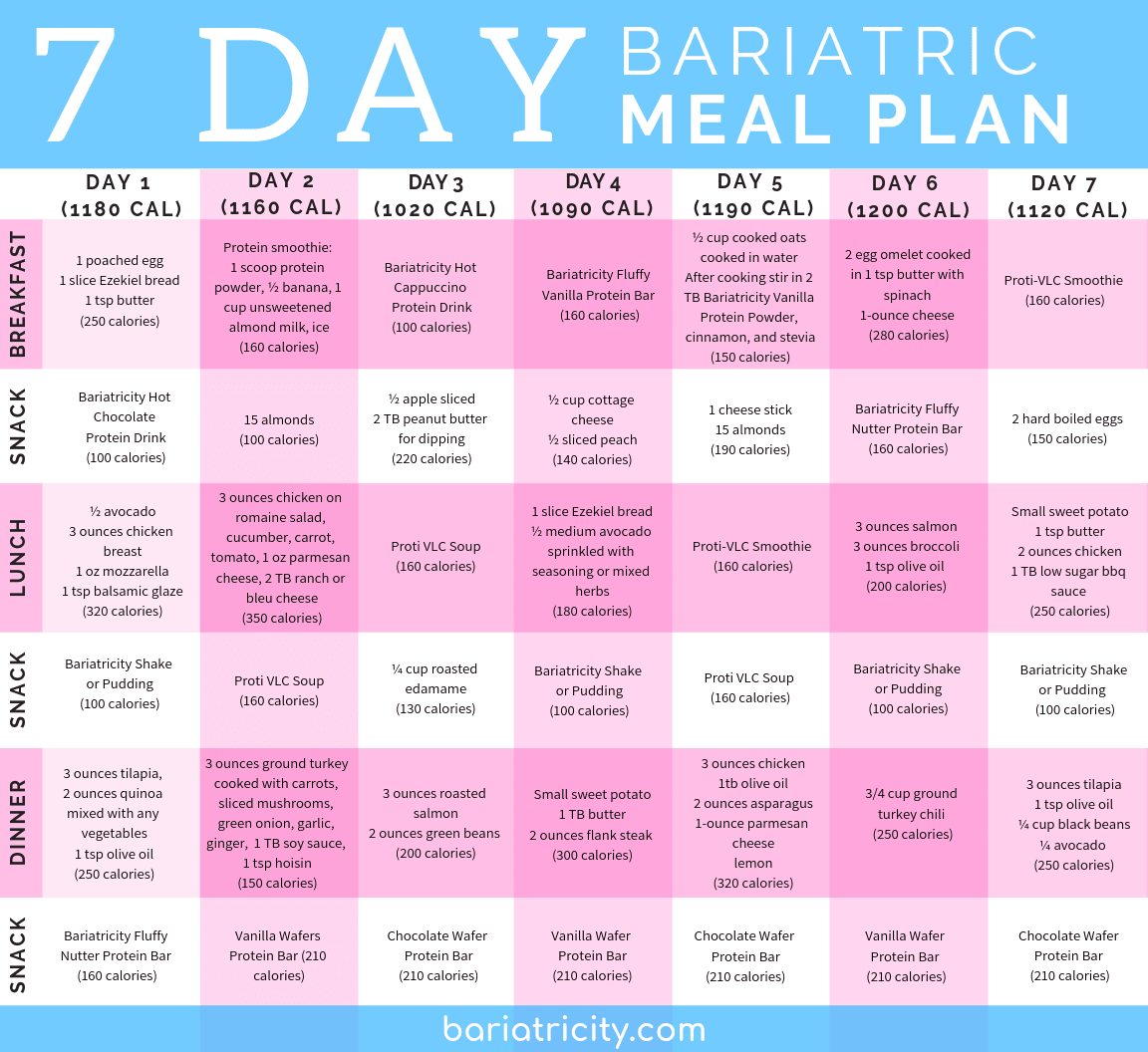
Credit: bariatricity.com
Introduction To Bariatric Meal Plans
Discover free bariatric meal plans designed for weight loss surgery patients. These plans focus on balanced nutrition and portion control. Easy recipes and meal ideas help you stay on track with your goals.
Bariatric surgery is a life-changing procedure. It helps people lose weight and improve their health. But after surgery, patients need a special diet. This is where bariatric meal plans come in. These plans are designed to meet the unique needs of bariatric patients. They ensure proper nutrition and support weight loss goals.What Is Bariatric Diet?
A bariatric diet is a specific eating plan. It is for people who have had bariatric surgery. This diet helps the body heal and adapt to changes. It focuses on small, nutrient-rich meals. Patients need to eat foods that are high in protein and low in sugar and fat.| Phase | Description |
|---|---|
| Phase 1 | Clear liquids only |
| Phase 2 | Full liquids and protein shakes |
| Phase 3 | Pureed foods |
| Phase 4 | Soft foods |
| Phase 5 | Regular foods with caution |
Benefits Of Bariatric Meal Plans
Bariatric meal plans offer many benefits. They help patients get the right nutrients. This is important for healing and energy. These plans also help control portion sizes. This can prevent overeating and support weight loss.- Promotes long-term weight loss
- Improves overall health
- Reduces risk of complications
- Helps maintain muscle mass
Getting Started With Bariatric Meals
Embarking on a bariatric journey requires careful planning, especially with your meals. A balanced diet is crucial for maintaining your health after surgery. This guide provides an easy way to start with free bariatric meal plans. Follow these steps to ensure a smooth transition into your new dietary lifestyle.
Steps To Begin
Starting with bariatric meals can seem daunting. Follow these steps to make it easier:
- Consult your dietitian: Always seek advice from your healthcare provider. They can offer a plan tailored to your needs.
- Plan your meals: Create a weekly meal plan. This helps you stay on track and avoid unhealthy choices.
- Focus on protein: Protein is key. Include lean meats, eggs, and dairy in your diet.
- Stay hydrated: Drink plenty of water. Aim for at least 64 ounces a day.
- Portion control: Use smaller plates and bowls. This helps control portion sizes.
Essential Kitchen Tools
Having the right kitchen tools can make preparing bariatric meals easier. Here are some must-haves:
- Food scale: Measure your portions accurately with a food scale.
- Blender: Smoothies and pureed foods are often part of the early stages. A good blender is essential.
- Measuring cups and spoons: Precise measurements help ensure you follow your diet plan.
- Non-stick pans: Use less oil and butter with non-stick cookware.
- Storage containers: Store prepped meals and snacks in airtight containers.
Keep these tools handy. They will simplify your meal preparation process and keep you on track with your bariatric meal plan.
Weekly Bariatric Meal Plan
A weekly bariatric meal plan can make life easier after surgery. It helps you stay on track with your nutrition goals. This plan includes balanced meals that are easy to prepare. Each meal provides the nutrients your body needs to recover and thrive.
Sample Breakfasts
Start your day with a healthy breakfast. A protein shake with almond milk is quick and nutritious. You can also try scrambled eggs with low-fat cheese. Greek yogurt with berries and a sprinkle of chia seeds is another option. These breakfasts are high in protein and will keep you full longer.
Sample Lunches
Lunchtime should be simple but satisfying. A grilled chicken salad with mixed greens and a light vinaigrette is a great choice. You can also have a turkey and avocado wrap using a whole wheat tortilla. For a warm option, consider a bowl of lentil soup with some steamed vegetables. These lunches are both nutritious and delicious.
Sample Dinners
Dinners should be balanced and filling. Baked salmon with a side of quinoa and steamed broccoli is an excellent option. Another idea is a lean beef stir-fry with bell peppers and snap peas. A vegetable and tofu stir-fry with brown rice is a great plant-based meal. These dinners will help you stay on track with your health goals.
Snack Ideas For Bariatric Diet
Discover healthy snack ideas for a bariatric diet with our free meal plans. Enjoy delicious, nutritious options that fit your lifestyle.
Snacks play a vital role in maintaining a bariatric diet. They help keep hunger at bay and provide essential nutrients. Choosing the right snacks ensures you stay on track with your diet goals. Here are some snack ideas that align with a bariatric meal plan.Healthy Snack Options
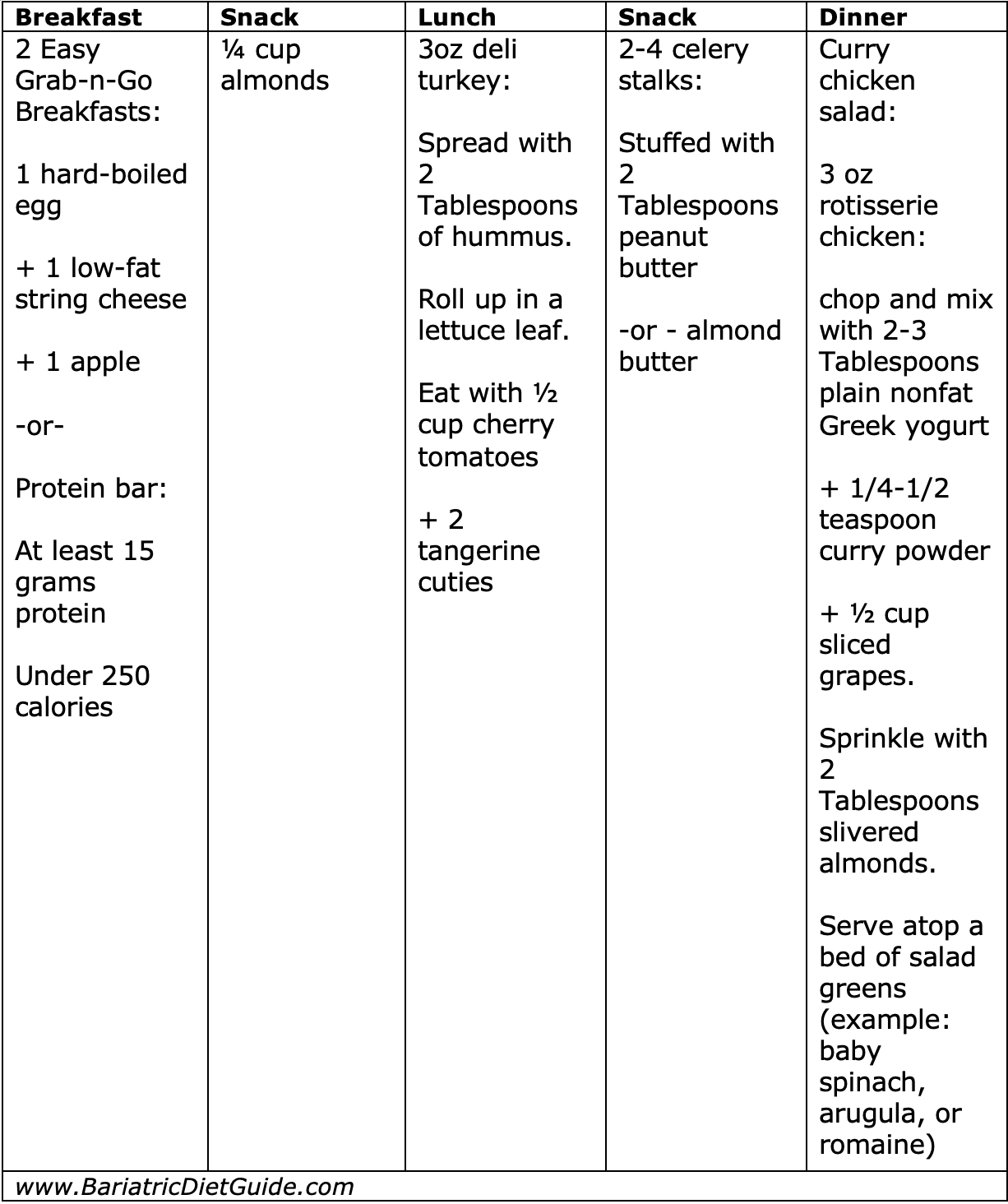
Greek yogurt with berries is an excellent choice. It is rich in protein and low in sugar. String cheese is another great option. It is easy to carry and provides a good dose of calcium. Hummus with sliced veggies offers fiber and protein. It is both filling and nutritious. Almonds or walnuts are good for a quick snack. They are packed with healthy fats and protein. Remember to control the portion size.Quick And Easy Snacks
Hard-boiled eggs are simple and nutritious. They are high in protein and easy to prepare. Cottage cheese with a sprinkle of cinnamon can be a tasty treat. It combines protein with a touch of sweetness. Tuna salad in cucumber boats makes for a refreshing snack. It is light and packed with protein. Protein bars can be handy. Choose ones with low sugar and high protein content. Sliced apple with peanut butter offers a good mix of fiber and healthy fats. It is both tasty and filling. “`Bariatric-friendly Recipes
Eating well after bariatric surgery is crucial. It helps in recovery and achieving weight loss goals. Bariatric-friendly recipes focus on high protein and low carb content. These recipes are delicious and easy to prepare.
High-protein Recipes
Protein is essential for muscle repair and overall health. Try a grilled chicken salad. It’s simple and tasty. Combine grilled chicken, mixed greens, and a light dressing. Add some cherry tomatoes for color.
Another option is a turkey and cheese roll-up. Use turkey slices and low-fat cheese. Roll them together for a quick snack. It’s portable and satisfying.
Low-carb Recipes
Low-carb meals help with weight loss. One idea is zucchini noodles with marinara sauce. Spiralize the zucchini. Cook it in a pan with some olive oil. Top with marinara sauce and a sprinkle of parmesan.
Another easy dish is cauliflower rice stir-fry. Chop cauliflower into small pieces. Sauté with your favorite vegetables and a bit of soy sauce. It’s filling and nutritious.
Credit: www.bariatricdietguide.com
Tips For Dining Out
Dining out can be tricky for those on a bariatric meal plan. Making the right choices helps maintain your health goals. Here are some tips for dining out.
Choosing The Right Restaurant
Not all restaurants cater to bariatric needs. Look for places with healthy options. Read online reviews. Check the menu in advance. Find restaurants that offer grilled or steamed dishes. Avoid fast food joints. They often have limited healthy choices.
Making Healthy Choices
Pick meals with lean protein and vegetables. Avoid fried foods and heavy sauces. Ask for dressings on the side. Choose smaller portions or share with a friend. Drink water instead of sugary drinks. Stay mindful of your choices to enjoy dining out while sticking to your plan.
Staying Motivated
Staying motivated on a bariatric meal plan can be challenging. Motivation is key to long-term success. Here are some strategies to help you stay on track.
Setting Realistic Goals
Start by setting realistic goals. Your goals should be specific, measurable, and achievable. Avoid setting goals that are too ambitious. Instead, focus on small, attainable milestones.
- Lose 2 pounds per week
- Eat 5 servings of vegetables daily
- Exercise for 30 minutes, 5 days a week
Celebrate your small successes. They add up to big results over time.
Tracking Your Progress
Tracking your progress helps keep you motivated. Use a journal, app, or a simple spreadsheet. Record your daily meals, exercise, and weight changes.
| Day | Meals | Exercise | Weight |
|---|---|---|---|
| Monday | 3 meals, 2 snacks | 30-minute walk | 180 lbs |
| Tuesday | 3 meals, 2 snacks | 30-minute yoga | 179 lbs |
Seeing your progress written down can be very motivating. It shows how far you’ve come. This can help you stay on track.
Credit: www.ambarinutrition.com
Common Challenges And Solutions
Starting a bariatric diet can be tough. Many people face common challenges. But with the right tips, you can overcome them. This section will help you understand these challenges and provide simple solutions.
Overcoming Plateaus
Weight loss plateaus are common. Your weight may stop dropping. It can be frustrating. Here are some tips to break through a plateau:
- Track Your Food: Keep a food journal. Sometimes, extra calories sneak in.
- Stay Hydrated: Drink plenty of water. Dehydration can slow your metabolism.
- Change Your Exercise Routine: Try new exercises. Your body can get used to the same routine.
- Eat Enough Protein: Protein helps you feel full. It also helps maintain muscle mass.
Dealing With Cravings
Cravings can be a big challenge. They can make you want to eat unhealthy foods. Here are some ways to deal with cravings:
- Plan Your Meals: Know what you will eat. This helps you avoid impulsive eating.
- Healthy Snacks: Keep healthy snacks handy. Fruits, nuts, and yogurt are good options.
- Stay Busy: Sometimes, boredom leads to cravings. Find a hobby or activity.
- Mindful Eating: Eat slowly. Enjoy each bite. This can help reduce cravings.
These tips can help you stay on track. Remember, small changes can make a big difference.
Frequently Asked Questions
What Are Bariatric Meal Plans?
Bariatric meal plans are specially designed diets for individuals who have undergone weight loss surgery. They focus on nutrient-rich foods.
Why Are Free Bariatric Meal Plans Important?
Free bariatric meal plans provide essential guidance without added costs. They help individuals maintain a healthy, balanced diet post-surgery.
How Do Bariatric Meal Plans Aid Weight Loss?
Bariatric meal plans control portion sizes and focus on high-protein, low-carb foods. This aids in maintaining weight loss.
Can I Customize My Bariatric Meal Plan?
Yes, you can customize your bariatric meal plan. It’s important to consult with a dietitian for personalized advice.
Conclusion
Ending your journey with these free bariatric meal plans can be rewarding. They provide structure and simplicity. You can enjoy tasty, healthy meals without stress. Your health goals are within reach. Stay consistent and keep exploring new recipes. Your commitment to a balanced diet will pay off.
Happy eating and stay healthy!