

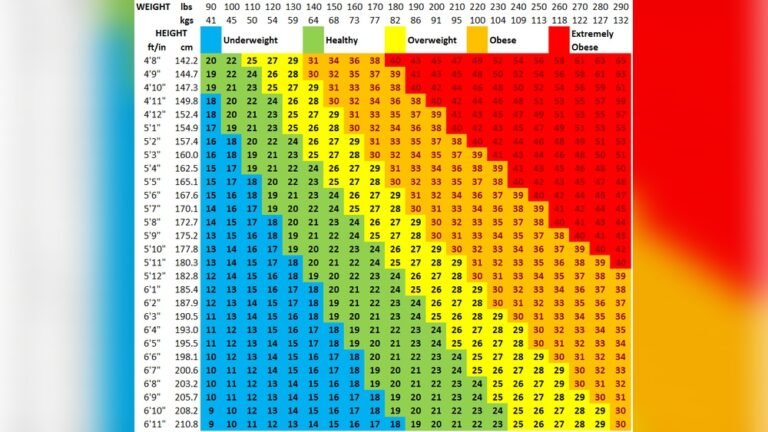
Are you curious about what your BMI really says about your health? Understanding your Body Mass Index (BMI) is a simple yet powerful way to get a quick snapshot of your body’s balance between height and weight.
But how do you calculate it correctly using your height and weight? More importantly, what does that number mean for you? You’ll discover easy steps to calculate your BMI, whether you use pounds and inches or kilograms and meters. Plus, you’ll learn why BMI matters and what to keep in mind when interpreting your results.
Keep reading to unlock the truth behind your numbers and take control of your health journey today.
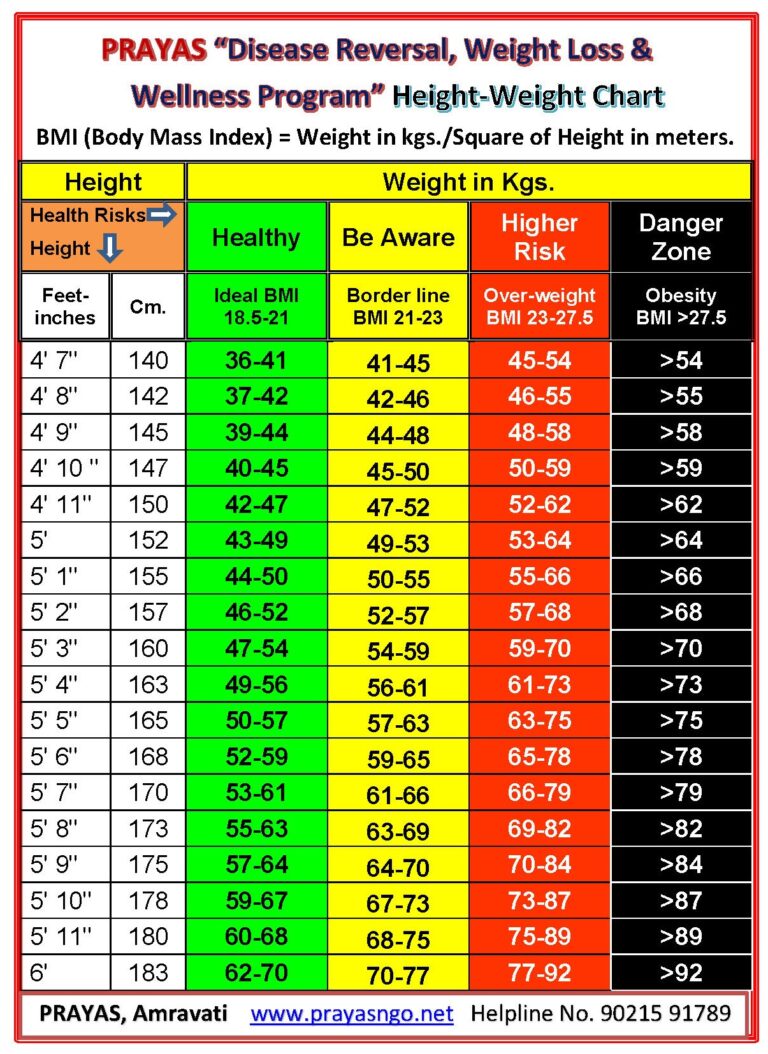
Credit: prayasngo.net
What Is Bmi
Body Mass Index, or BMI, is a simple number. It shows if your weight is healthy for your height. Doctors and health experts use it often. BMI helps to see if a person is underweight, normal, overweight, or obese.
The number comes from a basic calculation. It uses your weight and height. This makes BMI easy to find at home or online. Many use a BMI calculator to get quick results.
How Is Bmi Calculated?
Calculating BMI needs two measurements: height and weight. Use either pounds and inches or kilograms and meters. For pounds and inches, first convert height to inches.
Next, square your height in inches. Then, divide your weight by the squared height. Finally, multiply by 703 to get your BMI number.
Using metric units is simpler. Convert height to meters and square it. Divide your weight in kilograms by the squared height. This gives your BMI directly.
Why Use Bmi?
BMI gives a quick health check. It shows if your weight might cause health problems. Doctors use BMI to spot risks like heart disease or diabetes. It helps guide lifestyle or medical advice.
Though simple, BMI works for most adults. It is not perfect but gives a good starting point. It is a tool, not a full health report.
BMI does not measure body fat directly. It cannot tell the difference between muscle and fat. Athletes may have a high BMI but low body fat.
It also does not consider age, sex, or ethnicity. These factors affect body shape and health risks. Doctors use other tests along with BMI for a full view.

Credit: www.health.harvard.edu
Calculating Bmi With Us Units
Calculating BMI using US units helps many Americans check their health easily. The Body Mass Index (BMI) uses your height in inches and weight in pounds to give a simple number. This number shows if your weight is healthy for your height. Follow these steps to find your BMI in US units.
Convert Height To Inches
First, measure your height in feet and inches. Convert the feet to inches by multiplying by 12. Then add the extra inches. For example, if you are 5 feet 8 inches, multiply 5 by 12 (60) and add 8. Your total height is 68 inches.
Square Height In Inches
Next, multiply your height in inches by itself. This is called squaring the height. Using the 68 inches example, 68 times 68 equals 4,624. This number is important for the BMI formula.
Divide Weight By Squared Height
Now, take your weight in pounds. Divide it by the squared height number. Then multiply the result by 703 to get your BMI. For example, if your weight is 180 pounds, divide 180 by 4,624, then multiply by 703. This gives you a BMI around 27.4.
Calculating Bmi With Metric Units
Calculating BMI with metric units is simple and precise. It uses kilograms for weight and meters for height. This method is standard in most countries worldwide. It helps assess if your weight is healthy for your height. Follow these easy steps to calculate your BMI accurately.
Convert Height To Meters
First, measure your height in centimeters. Then divide that number by 100 to convert it to meters. For example, if you are 175 centimeters tall, your height in meters is 1.75. Always use meters in the next steps to keep the calculation correct.
Square Height In Meters
Next, multiply your height in meters by itself. This means you square the height. For example, 1.75 times 1.75 equals 3.06. Squaring the height creates the unit needed to compare with your weight correctly.
Divide Weight By Squared Height
Finally, take your weight in kilograms. Divide this number by the squared height from the previous step. For example, if you weigh 75 kilograms, divide 75 by 3.06. The result is your BMI number. This value helps indicate your weight category, such as underweight, normal, or overweight.

Credit: www.richardlipmanmd.com
Bmi Categories And Ranges
BMI categories help classify body weight based on height and weight measurements. These categories range from underweight to obese. Each range indicates different health risks and helps guide lifestyle choices. Knowing your BMI category offers a quick snapshot of your health status.
Underweight To Normal
A BMI below 18.5 is considered underweight. This may indicate malnutrition or other health issues. People in this range might need to gain weight for better health. A BMI between 18.5 and 24.9 falls in the normal range. This is the ideal range for most adults. It suggests a healthy balance between height and weight.
Overweight To Obese
A BMI from 25.0 to 29.9 is classified as overweight. This range signals increased risk for heart disease and diabetes. A BMI of 30.0 or higher falls into the obese category. Obesity raises the chance of serious health problems. Weight management and medical advice are important in these ranges.
Bmi For Different Ages And Genders
BMI varies for different ages and genders. It helps measure body fat using height and weight. This measure does not stay the same for all people. Age and gender change how BMI is read and used. Understanding these changes improves health insights for everyone. This section explains BMI differences for kids, teens, and adults.
Bmi As A Percentile
For children and teens, BMI is shown as a percentile. This compares their BMI with others of the same age and gender. A percentile shows if a child is underweight, healthy, or overweight. Doctors use growth charts to find these percentiles. A BMI at the 85th percentile or higher may mean overweight. Below the 5th percentile can mean underweight. Percentiles give a better picture than a single BMI number for youth.
Teen And Adult Differences
Teen BMI is different from adult BMI. Teens are still growing, so their BMI changes often. Adult BMI uses fixed categories like normal, overweight, or obese. Teen BMI looks at growth patterns and body changes. Adults have stable BMI ranges because their bodies do not grow much. Using adult BMI rules on teens can give wrong results. Age and gender must guide BMI interpretation for accurate health checks.
Limitations Of Bmi
BMI, or Body Mass Index, is a common tool to estimate if a person has a healthy weight. It uses height and weight to calculate a number. This number helps categorize people as underweight, normal, overweight, or obese. Despite its popularity, BMI has several important limitations. It does not give a full picture of an individual’s health.
Ignoring Body Fat Percentage
BMI does not measure body fat directly. Two people with the same BMI can have very different fat levels. One might have more muscle, while the other has more fat. Fat distribution also matters for health but is not shown by BMI. This can lead to wrong assumptions about someone’s health risks.
Variations By Ethnicity
BMI standards were mainly made using data from white Europeans. Different ethnic groups have different body types. This means BMI may not apply well to everyone. For example, some ethnicities may have higher body fat at lower BMIs. Others might have lower health risks at higher BMIs. This makes BMI less accurate for diverse populations.
Muscle Mass Impact
Muscle weighs more than fat. Athletes or very fit people often have high muscle mass. Their BMI might show them as overweight or obese. This result can be misleading. It labels healthy, strong individuals as unhealthy. BMI does not distinguish between muscle and fat weight.
Alternative Health Assessments
Alternative health assessments offer a broader view of your well-being. BMI uses height and weight but misses some health details. These assessments help understand body composition and overall health risks. They provide clearer insights beyond simple numbers.
Body Fat Measurement
Body fat measurement shows how much fat you carry. It separates fat from muscle and bone. Methods include skinfold calipers, bioelectrical impedance, and DEXA scans. This helps identify health risks linked to excess fat. It also tracks fitness progress more accurately than BMI.
Professional Health Evaluation
A professional health evaluation goes beyond numbers. Doctors assess family history, lifestyle, and medical conditions. They may check blood pressure, cholesterol, and blood sugar levels. This creates a full health profile tailored to you. It guides better health decisions and personalized care plans.
Tracking Bmi Over Time
Tracking BMI over time helps you understand changes in your body health. Regular checks reveal trends in weight and height relationships. This insight supports better decisions about diet and activity. Observing BMI changes assists in maintaining a healthy lifestyle. It also motivates ongoing efforts toward fitness goals.
Using Calculators And Charts
Calculators make BMI tracking simple and fast. Enter your height and weight to get your BMI number. Charts show how your BMI fits into health categories. They help you see if you are underweight, normal, overweight, or obese. Repeating this process over weeks or months shows progress clearly.
Monitoring Lifestyle Changes
Tracking BMI helps measure the impact of diet and exercise. As habits improve, your BMI may move toward a healthier range. It encourages sticking to positive changes like better eating or regular workouts. Notice small drops or gains to stay motivated. Adjust your routines based on BMI trends for better results.
Tips For Maintaining Healthy Bmi
Maintaining a healthy BMI is key to overall wellness. It helps reduce risks of many diseases. Small lifestyle changes can keep your BMI in a healthy range. Focus on what you eat, how active you are, and check in with health experts.
Diet And Nutrition
Eat a variety of fruits and vegetables every day. Choose whole grains instead of refined ones. Limit sugary drinks and snacks high in fat. Drink plenty of water to stay hydrated. Watch portion sizes to avoid overeating. Balanced meals support a healthy weight and body.
Exercise And Activity
Move your body at least 30 minutes daily. Walking, jogging, or cycling all count. Strength training helps build muscle and burn calories. Find activities you enjoy to stay motivated. Being active improves heart health and energy levels. Regular exercise supports a steady, healthy weight.
Consulting Healthcare Providers
Talk to a doctor to understand your BMI better. They can check other health markers too. A healthcare provider offers advice tailored to your needs. They help create a safe, effective plan for you. Regular checkups catch problems early. Professional guidance improves your health journey.
Conclusion
Using a BMI calculator with your height and weight helps you understand your health better. It offers a simple way to check if your weight is in a healthy range. Remember, BMI is just one tool and does not measure muscle or fat directly.
Always consider other factors like age, ethnicity, and overall health. For a full picture, talk to a healthcare professional. Keeping track of your BMI can guide you toward healthier lifestyle choices. Stay active and eat well to maintain a balanced body weight.