


When people hear about “fat burning foods,” many imagine magical ingredients that melt away body fat overnight. The reality is more practical and science-based, but still exciting. Some foods truly help your body burn more calories, control hunger, and support weight loss—when combined with healthy habits.
Understanding how these foods work can make fat loss easier and healthier.
Many dieters focus only on eating less. But choosing the right foods can actually help your body burn more energy, boost your metabolism, and keep you satisfied for longer. There’s no single food that does all the work, but a smart combination of fat burning foods can give you a real advantage.
Let’s explore what these foods are, how they work, and how you can add them to your daily life.
How Do Fat Burning Foods Work?
Not all foods are equal when it comes to weight loss. Fat burning foods help in several ways:
- Some increase your metabolism, so you burn more calories even at rest.
- Others reduce your appetite, so you naturally eat less.
- Some foods improve blood sugar control, which reduces cravings.
- Certain foods help the body use stored fat for energy.
Let’s break down the science behind these effects.
Thermogenic Effect
When you eat, your body uses energy to digest and process food. This is called the thermic effect of food (TEF). Protein-rich foods, spicy foods, and some teas have a higher TEF, so your body burns more calories processing them.
Appetite And Satiety
Fiber-rich and protein-rich foods make you feel full for longer. This means you’re less likely to snack on unhealthy foods or overeat at meals.
Hormonal Impact
Some foods help balance insulin, ghrelin, and leptin—hormones that control hunger, fat storage, and energy use.
Realistic Expectations
No food melts fat instantly. But a diet rich in fat burning foods, combined with regular exercise and good sleep, can make a noticeable difference.
Top Fat Burning Foods And How They Work
Let’s look at the most effective fat burning foods, why they work, and how you can use them.
1. Eggs
Eggs are a nutrient powerhouse. They’re high in protein and healthy fats, but low in calories. Studies show that eating eggs for breakfast reduces hunger and calorie intake throughout the day. The high protein content also increases the thermic effect, so you burn more calories digesting eggs compared to carbs or fats.
Practical tip: Hard-boiled eggs make a quick snack. Scrambled eggs with vegetables are a filling breakfast.
2. Greek Yogurt
Greek yogurt is loaded with protein and contains probiotics, which improve gut health. Protein helps you feel full, while the probiotics can reduce belly fat by improving digestion and reducing inflammation.
Beginner insight: Choose plain, unsweetened Greek yogurt. Many flavored yogurts are packed with sugar, which can slow fat loss.
3. Leafy Greens
Foods like spinach, kale, and Swiss chard are low in calories but high in fiber, vitamins, and minerals. The fiber slows digestion, making you feel full longer. They also add volume to your meals, so you can eat a larger portion without extra calories.
Non-obvious tip: Use leafy greens as a base for salads, wraps, or even blend them into smoothies.
4. Fatty Fish
Salmon, mackerel, sardines, and trout are rich in omega-3 fatty acids. These fats help reduce inflammation, which is often linked to obesity. Eating fatty fish also supports muscle building and improves metabolism.
Insight: If you don’t like fish, fish oil supplements can help, but real fish offers protein and other nutrients.
5. Chicken Breast
Chicken breast is a lean protein that helps build and preserve muscle during weight loss. More muscle means a higher resting metabolism, so you burn more calories all day.
Helpful hint: Grill or bake chicken instead of frying. Remove the skin to reduce extra fat.
6. Chili Peppers
Chili peppers contain capsaicin, a compound that boosts metabolism and increases fat burning. Research suggests capsaicin can increase calorie burn by about 50 calories per day.
Practical use: Add chopped chili to stir-fries, soups, or salads. Start with small amounts if you’re sensitive to spice.
7. Green Tea
Green tea contains caffeine and catechins, both of which support fat burning. Studies show that green tea extract can increase calorie burn, especially during exercise.
Easy swap: Drink green tea instead of sugary drinks. Try both hot and cold versions.
8. Coffee
Coffee is a well-known metabolism booster. The caffeine in coffee increases your energy use, especially before workouts. It may also improve exercise performance, helping you burn more calories.
Warning: Avoid adding too much sugar or cream. Black coffee or coffee with a splash of milk is best.
9. Apple Cider Vinegar
Some studies show that apple cider vinegar can help reduce belly fat and control blood sugar. The acetic acid in vinegar may suppress appetite and help your body use fat for energy.
Usage tip: Mix 1–2 tablespoons in a glass of water before meals. Do not drink it straight, as it can harm your teeth and throat.
10. Coconut Oil
Coconut oil contains medium-chain triglycerides (MCTs), which are quickly used for energy instead of being stored as fat. Some research suggests MCTs boost metabolism and help reduce belly fat.
Caution: Coconut oil is high in calories. Use it to replace other fats, not in addition to them.
11. Beans And Legumes
Beans, lentils, chickpeas, and peas are rich in protein and fiber. They digest slowly, keeping you full and controlling blood sugar. They also promote healthy gut bacteria, which can support weight loss.
Idea: Add beans to salads, soups, or make a bean-based chili.
12. Berries
Blueberries, strawberries, raspberries, and blackberries are low in calories and high in fiber and antioxidants. The fiber slows sugar absorption and keeps you full, while antioxidants may help reduce inflammation.
Practical use: Add berries to yogurt, oatmeal, or eat as a snack.
13. Nuts
Almonds, walnuts, pistachios, and cashews are rich in healthy fats, protein, and fiber. They’re calorie-dense, but studies show that people who eat nuts regularly tend to have lower body weight.
Beginner mistake: Overeating nuts is easy. Stick to a small handful (about 30g) per day.
14. Whole Grains
Oats, brown rice, quinoa, and barley are whole grains with plenty of fiber and some protein. Eating whole grains instead of refined grains keeps you full and supports steady energy.
Insider tip: Overnight oats or quinoa salads are simple ways to add whole grains to your meals.
15. Grapefruit
Some studies suggest that grapefruit may help with fat loss. Compounds in grapefruit help control appetite and blood sugar. One study found that people who ate half a grapefruit before meals lost more weight than those who didn’t.
Important: Grapefruit can interact with some medications, so check with your doctor.
16. Avocado
Avocados are full of healthy fats and fiber. They help you feel satisfied after eating and may reduce belly fat. The monounsaturated fats in avocado also support heart health.
Serving suggestion: Add sliced avocado to salads or sandwiches. Watch your portions; avocados are high in calories.
17. Broccoli And Cruciferous Vegetables
Broccoli, cauliflower, Brussels sprouts, and cabbage are high in fiber and nutrients. They help detoxify the body and support fat burning through their effect on hormones and digestion.
Non-obvious insight: Lightly steaming cruciferous vegetables makes them easier to digest.
18. Watermelon
Watermelon is 90% water, low in calories, and can help you feel full. It’s a good snack for reducing hunger without extra calories. The natural sugars are balanced by the high water content.
Helpful tip: Eat watermelon before meals to reduce appetite.
19. Cottage Cheese
Cottage cheese is high in protein and low in fat (if you choose low-fat versions). The slow-digesting casein protein keeps you full for hours and helps preserve muscle during weight loss.
Practical use: Add fruit or a sprinkle of nuts to cottage cheese for a satisfying snack.
20. Garlic
Garlic contains compounds that may help break down fat and boost metabolism. Some animal studies show that garlic helps reduce body fat. It also adds flavor, so you can use less salt or fat in cooking.
Cooking tip: Add fresh garlic to soups, sauces, or roasted vegetables.
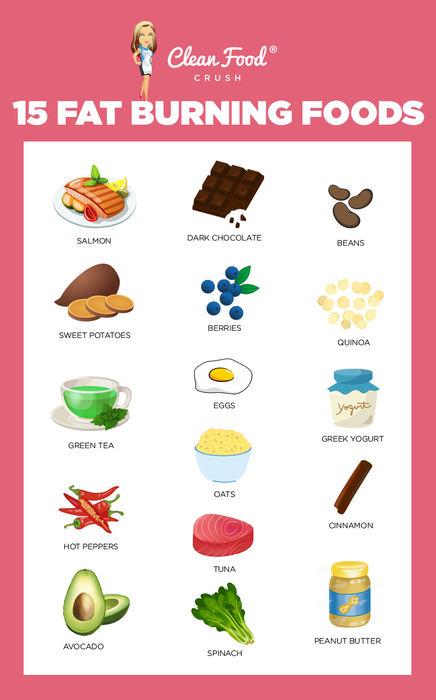
Credit: cleanfoodcrush.com
How To Add Fat Burning Foods To Your Diet
Knowing which foods burn fat is helpful, but adding them to your routine is where real change happens. Here are some practical ideas:
- Start your day with eggs or Greek yogurt with berries.
- Use leafy greens as a base for your lunch salad.
- Swap white rice for quinoa or brown rice.
- Add beans or lentils to soups and stews.
- Snack on a small handful of nuts or cottage cheese with fruit.
- Drink green tea or black coffee instead of sugary drinks.
- Use chili peppers and garlic to spice up your meals.
Beginner mistake: Trying to change everything at once. Start by adding one or two fat burning foods to each meal, then build from there.
Common Myths About Fat Burning Foods
With so much information online, it’s easy to get confused. Here are some common myths—debunked.
Myth 1: “eating Fat Burning Foods Means I Don’t Need Exercise.”
Even the best fat burning foods work best with regular physical activity. Diet and exercise work together for the best results.
Myth 2: “if I Eat More Fat Burning Foods, I Can Eat As Much As I Want.”
Calories still matter. Overeating even healthy foods can stop weight loss. Focus on balanced portions.
Myth 3: “supplements Are Better Than Real Foods.”
Whole foods provide fiber, vitamins, and other nutrients that supplements don’t. Use supplements only if you can’t get enough from food.
Myth 4: “all Green Teas And Yogurts Are The Same.”
Some green teas are mixed with sugar or other ingredients. Many yogurts have added sugar. Always read the label.
Myth 5: “spicy Foods Melt Fat Instantly.”
Spicy foods like chili peppers boost metabolism, but the effect is small. They help most when combined with other healthy habits.
Comparing Fat Burning Foods: Calories, Protein, And Fiber
To help you choose, here’s a comparison of some top fat burning foods per 100g serving.
| Food | Calories | Protein (g) | Fiber (g) |
|---|---|---|---|
| Chicken Breast | 165 | 31 | 0 |
| Egg | 143 | 13 | 0 |
| Greek Yogurt | 59 | 10 | 0 |
| Black Beans | 132 | 8.9 | 8.7 |
| Spinach | 23 | 2.9 | 2.2 |
| Avocado | 160 | 2 | 7 |
| Almonds | 579 | 21 | 12.5 |
| Berries (mixed) | 57 | 0.8 | 3.7 |
Comparing Thermogenic Effect Of Different Foods
The thermogenic effect (how much energy your body uses to digest food) varies by food group.
| Food Type | Thermic Effect (% of Calories) |
|---|---|
| Protein-rich (e.g. chicken, eggs) | 20–30% |
| Carbohydrate-rich (beans, grains) | 5–10% |
| Fat-rich (nuts, oils) | 0–3% |
| Spicy foods (chili, ginger) | Varies (small boost) |
Best Times To Eat Fat Burning Foods
Meal timing can also play a role in how your body uses energy.
| Meal | Good Fat Burning Foods | Why It Works |
|---|---|---|
| Breakfast | Eggs, Greek yogurt, berries | High protein, keeps you full |
| Lunch | Leafy greens, chicken, beans | Fiber and protein boost |
| Snack | Nuts, cottage cheese, fruit | Healthy fats and protein |
| Dinner | Fatty fish, broccoli, quinoa | Balanced nutrients, supports recovery |
Mistakes To Avoid When Using Fat Burning Foods
Even healthy foods can cause problems if used the wrong way. Here’s what to watch for:
- Overeating calorie-dense foods like nuts or avocado. Measure your portions.
- Ignoring added sugars in yogurt, tea, or snack bars. Always check labels.
- Relying only on food without exercise or sleep. Fat loss is a full-body process.
- Skipping meals and then overeating later. Spread your fat burning foods throughout the day.
- Not drinking enough water. Staying hydrated helps your metabolism and reduces hunger.

Credit: www.amazon.com
Putting It All Together: Sample Fat Burning Meal Plan
Here’s an example of a day that uses fat burning foods:
Breakfast: Scrambled eggs with spinach and tomatoes, green tea
Snack: Greek yogurt with blueberries
Lunch: Grilled chicken breast, quinoa salad with leafy greens and avocado
Snack: A small handful of almonds and an apple
Dinner: Baked salmon, steamed broccoli, and brown rice
Evening: Cottage cheese with sliced strawberries
This plan combines protein, fiber, healthy fats, and thermogenic foods throughout the day. Adjust portions based on your calorie needs.
Real-world Results: What Science Says
Research backs up the power of fat burning foods. For example:
- A study in the American Journal of Clinical Nutrition found that high-protein diets increase calorie burning and fat loss compared to high-carb diets.
- People who eat more fiber (from beans, vegetables, and whole grains) lose more weight and keep it off.
- Omega-3 fats from fish help reduce belly fat and inflammation.
But remember, the biggest results come from consistency—not perfection. Eating fat burning foods most of the time, combined with regular movement and good sleep, brings the best results.
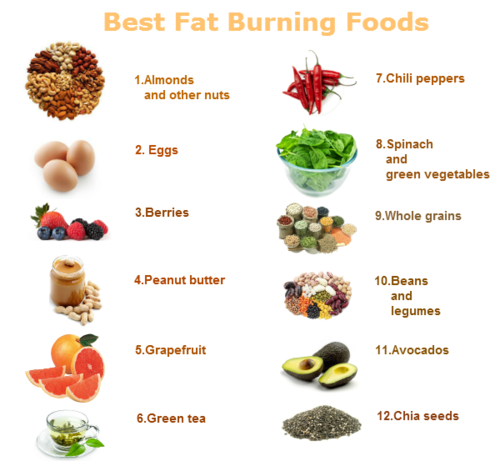
Credit: goqii.com
Frequently Asked Questions
What Are The Top 3 Fat Burning Foods?
The top 3 are eggs, Greek yogurt, and chicken breast. They are high in protein, help control hunger, and increase your metabolism.
Can I Eat Fat Burning Foods At Night?
Yes, but choose lighter options like Greek yogurt, berries, or cottage cheese. Heavy meals late at night can slow digestion.
Are Supplements As Effective As Real Fat Burning Foods?
No. Whole foods provide more nutrients, fiber, and satisfaction. Supplements can help if you lack certain nutrients but should not replace real food.
How Fast Will I Lose Weight With Fat Burning Foods?
Results vary. Most people see changes in a few weeks when they combine these foods with exercise and healthy habits. Aim for 0. 5–1 kg (1–2 lbs) weight loss per week.
Where Can I Learn More About The Science Behind Fat Burning Foods?
A great place to start is the National Institutes of Health, which offers research-based articles on nutrition and metabolism.
Fat burning foods can make your weight loss journey easier and more enjoyable. By choosing the right foods, eating balanced meals, and avoiding common mistakes, you’ll set yourself up for long-term success. Remember, small changes add up—start today and keep going!