

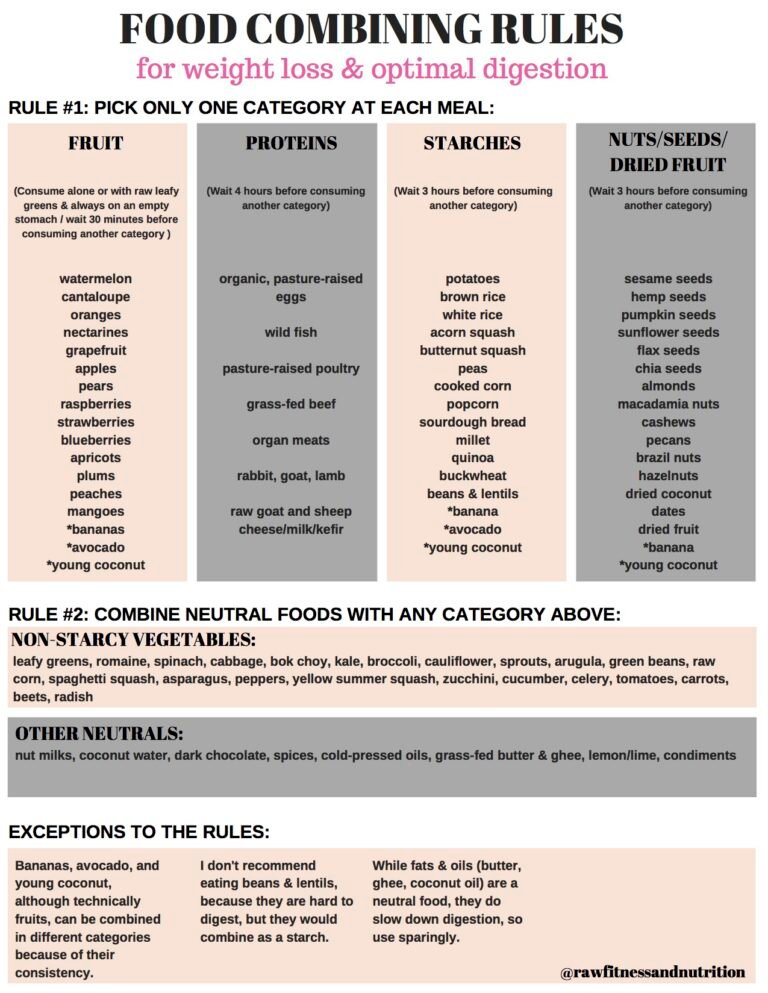
Combining foods correctly can help you lose weight effectively. A food combining diet plan balances your meals for optimal digestion.
The food combining diet is based on the idea that certain foods digest best when eaten together. By pairing specific foods, you can enhance digestion, boost metabolism, and aid weight loss. This plan focuses on the natural chemistry of foods and how they interact in your stomach.
Understanding these interactions can lead to better nutrient absorption and fewer digestive issues. Many people find this approach to be a sustainable and healthy way to lose weight. Ready to learn how to create a balanced food combining diet for weight loss? Let’s explore the basics and benefits of this unique eating plan.

Credit: theguiltlesslife.wordpress.com
Introduction To Food Combining
Food combining is an eating plan that focuses on consuming specific foods together. This approach can improve digestion and promote weight loss. It is based on the idea that some foods digest better when eaten in certain combinations. This diet plan encourages pairing foods in a way that the body can digest them more efficiently.
What Is Food Combining?
Food combining involves eating foods that work well together. The goal is to help the digestive system process food efficiently. This means avoiding combinations that may cause digestive discomfort or slow down metabolism.
For example, it suggests eating proteins and carbohydrates separately. This is because they require different digestive enzymes. By following these guidelines, you can improve digestion and nutrient absorption.
Benefits Of Food Combining
There are several benefits to following a food combining diet plan. Here are some key benefits:
- Improved Digestion: Eating compatible foods helps the body digest food more easily.
- Increased Energy: Proper digestion can lead to better energy levels.
- Weight Loss: Efficient digestion can boost metabolism and aid in weight loss.
- Reduced Bloating: Proper food combinations can help reduce gas and bloating.
To summarize, food combining can be a helpful approach for those looking to improve digestion and lose weight. By eating foods that work well together, you can support your body’s natural digestive processes.
Principles Of Food Combining
Food combining is an eating method based on pairing certain foods together. The goal is to improve digestion and promote weight loss. By following these principles, you may see better results on your weight loss journey.
Basic Rules
First, avoid mixing proteins with carbohydrates in the same meal. This can slow down digestion and cause bloating. Second, always eat fruit on an empty stomach. This helps your body absorb nutrients faster. Third, do not mix different types of proteins. For example, avoid pairing meat with dairy. Fourth, eat vegetables with either proteins or carbohydrates. Vegetables are versatile and pair well with many foods.
Common Mistakes To Avoid
One common mistake is combining proteins with starches. This can lead to poor digestion and weight gain. Another mistake is eating fruit after a meal. This can cause fermentation and gas. Avoid drinking cold beverages with meals. This can slow down digestion and make it harder to lose weight. Finally, do not eat too many different foods at once. Keeping meals simple aids digestion and supports weight loss.
Foods To Combine
The food combining diet plan helps you lose weight. It pairs specific foods together for better digestion. This can lead to weight loss and better health. Let’s explore which foods to combine.
Proteins And Vegetables
Combining proteins with vegetables is smart. Proteins like chicken, fish, and beans pair well with leafy greens. This combination aids digestion. It also keeps you full longer. Try grilled chicken with a spinach salad. Or enjoy fish with steamed broccoli. The options are endless.
Carbohydrates And Vegetables
Carbohydrates and vegetables are another good pair. Whole grains like brown rice and quinoa go well with a variety of vegetables. This pairing offers energy and fiber. It helps you stay satisfied. Consider brown rice with stir-fried vegetables. Or quinoa mixed with roasted veggies. Simple and tasty.

Credit: ca.pinterest.com
Foods To Avoid Combining
Understanding which foods to avoid combining is crucial for a food combining diet plan. Certain food combinations can affect digestion and weight loss. Knowing what to avoid can help you achieve better results.
Proteins And Carbohydrates
Combining proteins and carbohydrates can slow digestion. Proteins need acidic conditions for digestion, while carbohydrates need alkaline. This combination can lead to bloating and discomfort. For example, avoid eating steak with potatoes.
Fruits And Other Foods
Fruits digest quickly and should be eaten alone. Pairing fruits with other foods can cause fermentation in the stomach. This leads to gas and indigestion. Avoid mixing fruits with dairy or grains. For example, do not eat bananas with yogurt.
Sample Meal Plans
Creating a balanced meal plan is essential for the Food Combining Diet. This plan helps to enhance digestion and boost weight loss. Below are some easy and delicious meal ideas to get you started.
Breakfast Ideas
Start your day with a fresh fruit salad. Combine melons, berries, and citrus fruits. Another option is a green smoothie. Blend spinach, banana, and almond milk. You can also try avocado toast. Use whole-grain bread and add a sprinkle of seeds.
Lunch And Dinner Options
For lunch, try a quinoa and veggie bowl. Mix cooked quinoa with roasted vegetables. Add a handful of greens and a light dressing. Another great option is a chickpea salad. Combine chickpeas, cucumbers, tomatoes, and herbs.
Dinner can be a simple stir-fry. Use lean proteins like chicken or tofu. Add colorful vegetables and serve over brown rice. A vegetable soup is also a good choice. Use a variety of seasonal vegetables and simmer with herbs.
Tips For Success
Embarking on a food combining diet plan for weight loss can seem challenging. Success often depends on effective strategies. Here are some tips to help you navigate this journey with ease. These tips focus on planning and being in tune with your body.
Planning Ahead
Plan your meals for the week. This prevents impulsive eating. Make a list of allowed food combinations. Organize your groceries based on this list. Prepare ingredients ahead of time. This makes meal preparation quicker and easier. Use a meal planner. This helps you stay on track and meet your goals.
Listening To Your Body
Pay attention to how different foods make you feel. Notice any discomfort or bloating. Adjust your food combinations based on these observations. Eat slowly. This helps your body signal when it is full. Drink plenty of water. It aids digestion and keeps you hydrated. Rest if you feel tired. Your body needs time to adjust to new eating habits. Keep a food journal. It helps track your progress and identify patterns.
Exercise And Food Combining
Combining the right exercises with a food combining diet plan can boost weight loss. Exercise enhances metabolism, burns calories, and supports muscle growth. When paired with a food combining diet, it ensures you get the best results. Below, we explore the best exercises for weight loss and how to balance diet and workout.
Best Exercises For Weight Loss
- Cardio Workouts
- Running or Jogging
- Swimming
- Cycling
- Strength Training
- Weight Lifting
- Resistance Bands
- High-Intensity Interval Training (HIIT)
- Short Bursts of High-Intensity Exercises
- Followed by Low-Intensity Recovery Periods
Balancing Diet And Workout
Balancing your diet and workout is crucial. Follow these steps:
- Eat a balanced meal 1-2 hours before working out.
- Include carbs for energy and protein for muscle repair.
- Drink water to stay hydrated during exercise.
- Post-workout, have a meal with protein and carbs within 30 minutes.
Here is a simple table to guide your pre and post-workout meals:
| Meal Type | Food Options |
|---|---|
| Pre-Workout | Banana with peanut butter, Oatmeal with fruits |
| Post-Workout | Grilled chicken with quinoa, Greek yogurt with berries |
Remember, consistency is key. Stick to your routine for the best results.
Potential Challenges
Embarking on a food combining diet plan for weight loss can be exciting. Yet, it comes with its own set of challenges. Understanding these potential hurdles can help you stay on track and achieve your goals.
Dealing With Cravings
Cravings can strike at any time, making it hard to stick to your plan. Identifying triggers for your cravings is the first step. Are you stressed, bored, or feeling emotional? Knowing this helps you address the root cause. Keeping healthy snacks handy can reduce temptation. Fresh fruit, nuts, or yogurt are good options. Hydration is also key. Sometimes, thirst can be mistaken for hunger. Drinking water throughout the day keeps you hydrated and less prone to cravings.
Staying Motivated
Staying motivated is essential for long-term success. Set clear, achievable goals. Small milestones can make a big difference. Celebrate each victory, no matter how small. Keeping a food diary can also help. It makes you more aware of your eating habits. Joining a support group or finding a diet buddy can provide extra encouragement. Sharing your journey with others keeps you accountable. Remember, progress is progress, no matter the pace. Stay positive and patient with yourself.
Success Stories
Success stories inspire and motivate people. They show that goals are achievable. The food combining diet plan has many success stories. These stories highlight the power of proper food combinations for weight loss. Real-life examples and expert insights provide valuable lessons.
Real-life Examples
Jane lost 20 pounds in three months. She followed the food combining diet plan. Jane combined proteins with vegetables and avoided starches. She also drank plenty of water. Her energy increased, and she felt healthier. Jane’s story is just one of many.
Mike struggled with his weight for years. He tried many diets without success. Then he found the food combining diet plan. Mike lost 30 pounds in four months. He felt more energetic and less bloated. His confidence grew with every pound lost.
Expert Insights
Dr. Smith, a nutritionist, supports the food combining diet plan. He explains that certain food combinations aid digestion. This can lead to better nutrient absorption. Dr. Smith advises eating fruits alone and not mixing proteins with starches. His patients have seen great results.
Nutrition expert, Lisa Brown, highlights the benefits of the diet. She notes that the plan reduces digestive stress. This leads to weight loss. Lisa also mentions the importance of hydration. Drinking water aids in digestion and overall health.
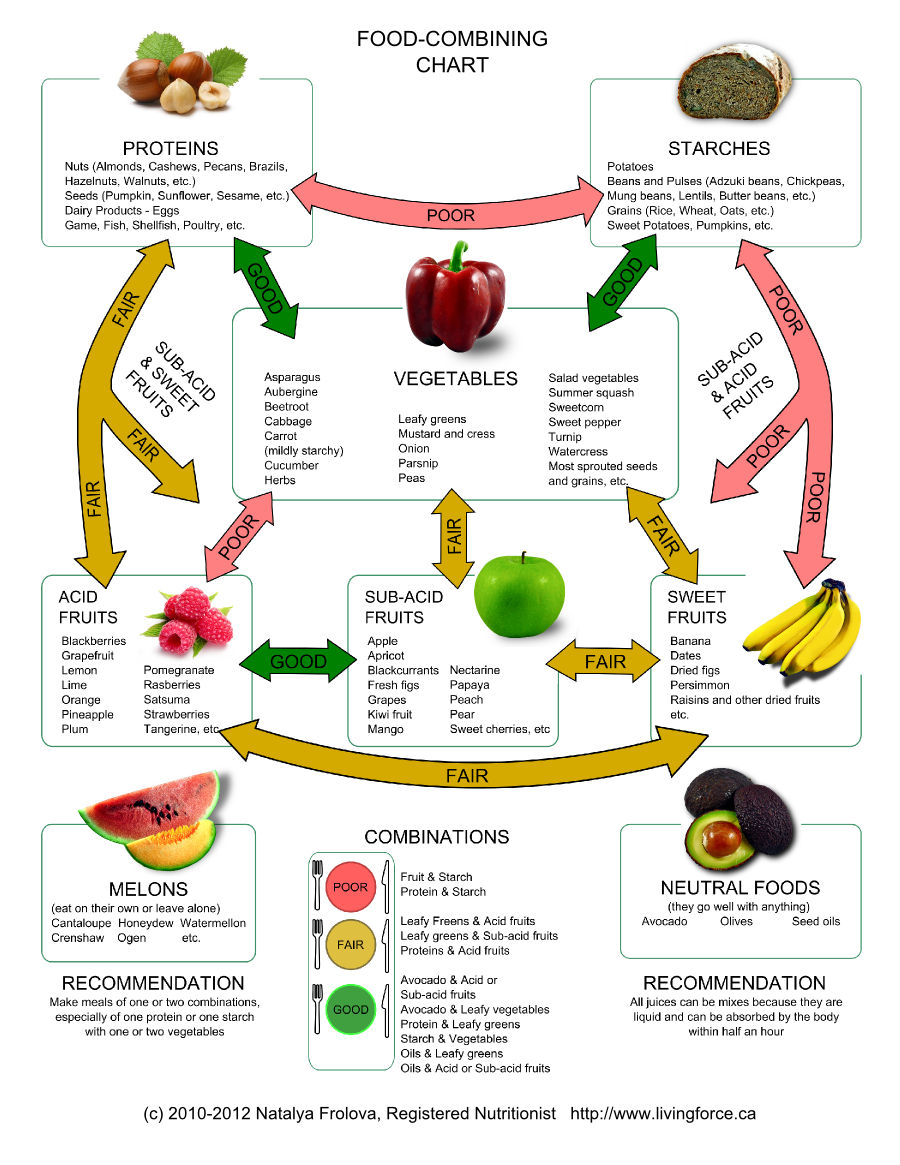
Credit: infofit.ca
Frequently Asked Questions
What Is A Food Combining Diet?
A food combining diet involves eating specific food groups together. This method aims to improve digestion and promote weight loss. It emphasizes combining proteins, carbohydrates, and fats in a way that optimizes nutrient absorption.
How Does Food Combining Help Weight Loss?
Food combining aids digestion, which can enhance nutrient absorption. Better digestion can lead to increased energy and reduced bloating. This, in turn, supports weight loss by improving overall metabolic function.
Can I Eat Fruits With Proteins?
It’s advised to eat fruits separately from proteins. Fruits digest quickly and can ferment if eaten with proteins. This can cause digestive discomfort and hinder nutrient absorption.
Are There Any Food Combining Rules?
Yes, there are several rules. Avoid combining starches and proteins. Eat fruits alone and combine vegetables with proteins or starches. Follow these rules for better digestion and weight loss.
Conclusion
A food combining diet plan can support your weight loss journey. Simple rules make it easy to follow. Eat fruits alone, pair proteins with veggies, and avoid mixing starches with proteins. These tips can help digestion and boost energy levels.
Stick with it consistently. Track your progress. Celebrate small victories. Remember, every step counts. Stay dedicated and see the results. Healthy eating leads to a healthier you.