

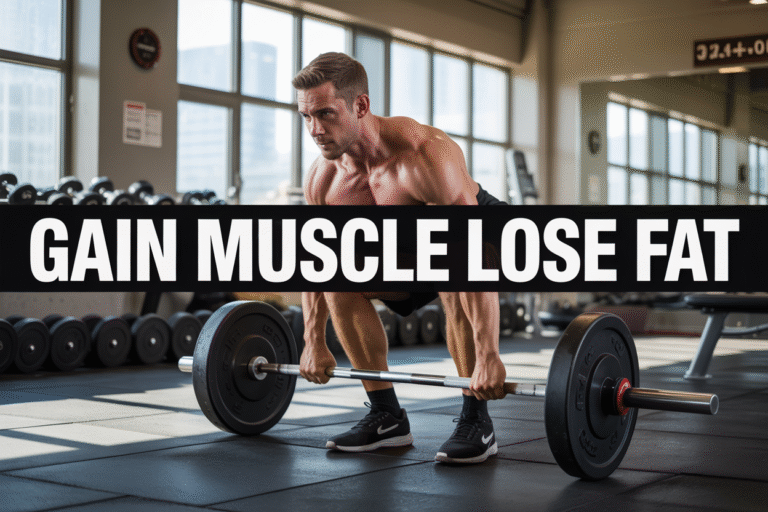
Building muscle while losing fat isn’t just possible—it’s one of the smartest approaches to transforming your body. This guide is for anyone who wants to get stronger and leaner without sacrificing one goal for the other, from beginners starting their fitness journey to experienced gym-goers looking to refine their approach.
Body recomposition lets you change what your body is made of, not just what it weighs on the scale. Instead of traditional dieting that often leads to muscle loss alongside fat loss, this approach helps you keep and build lean muscle mass while dropping unwanted body fat.
We’ll cover the fundamentals of creating a sustainable calorie deficit that preserves muscle, plus how to optimize your protein intake for muscle growth. You’ll also learn how strategic strength training becomes your secret weapon for achieving lasting body recomposition results.
The best part? These strategies work for everyone, regardless of your starting point or fitness level.
Understanding Body Recomposition vs Traditional Weight Loss

Why Body Composition Matters More Than Scale Weight
When pursuing body recomposition, understanding why body composition takes precedence over traditional scale weight becomes fundamental to your success. Body composition refers to the amount of fat and fat-free mass (muscle, bone, and water) your body contains, providing a far more accurate picture of your health and fitness progress than simple weight measurements.
Analyzing body composition gives a better understanding of health than other screening methods that only factor in weight and height, such as body mass index (BMI). This is because your body fat percentage in relation to your muscle mass better reflects your overall well-being than just weight or BMI alone. While the scale might show minimal changes during body recomposition, your body’s internal composition could be dramatically improving as you simultaneously lose fat and gain muscle.
Unlike traditional weight loss approaches that focus solely on reducing numbers on the scale, body recomposition is a lifestyle approach where fitness and nutrition techniques lead to beneficial changes in your body’s ratio of fat to muscle. The term “recomposition” literally means “to form something again or in a different way,” perfectly capturing the essence of transforming your body’s makeup to contain less fat and more lean muscle mass.
This shift in focus becomes particularly important because muscle tissue is denser than fat tissue, meaning you can actually improve your physique significantly while maintaining or even slightly increasing your overall body weight. The visual and health benefits of gaining muscle while losing fat far outweigh any temporary plateaus you might see on the scale.
How Muscle Loss Affects Long-Term Health and Metabolism
Understanding the consequences of muscle loss reveals why traditional dieting approaches often fail in the long term. When people focus solely on creating large calorie deficits through very low calorie dieting or engaging in hours of cardiovascular exercise, they don’t necessarily preserve muscle mass. This approach can lead to significant muscle loss alongside fat loss, creating metabolic challenges that extend far beyond your initial weight loss goals.
Muscle tissue is metabolically active, meaning it requires more energy to maintain than fat tissue. When you lose muscle mass through extreme dieting or inadequate protein intake, your metabolic rate decreases, making it increasingly difficult to maintain your weight loss results. This metabolic slowdown explains why many people experience weight regain after completing traditional diet programs.
Focusing only on diet and neglecting exercise habits may result in a loss of muscle mass, which compromises both your physical appearance and functional strength. Muscle loss affects your ability to perform daily activities, impacts your posture, and reduces your overall quality of life as you age. Additionally, maintaining lean muscle mass becomes increasingly important for bone health, insulin sensitivity, and overall longevity.
The preservation of muscle mass during fat loss requires a strategic approach that combines moderate calorie restriction with resistance training. Rather than creating extreme calorie deficits, successful body recomposition involves moderately decreasing your calorie intake while incorporating exercises that build muscle mass into your routine, such as strength training.
The Benefits of Focusing on Fat-to-Muscle Ratio
Shifting your focus to improving your fat-to-muscle ratio unlocks numerous benefits that extend far beyond aesthetic improvements. Body recomposition methods can vary depending on your ultimate goal, whether you’re a lean individual looking to build more muscle and cut fat, or someone with a higher body fat percentage seeking to lose weight while increasing muscle tone. The good news is that body recomposition benefits everyone, regardless of the amount of fat you want to drop or muscle you want to gain.
When you prioritize building and maintaining muscle while losing fat, you create a more sustainable approach to long-term health and fitness. Muscle tissue not only improves your physical appearance by creating a more defined, toned look, but it also enhances your functional capacity for daily activities and athletic performance.
From a metabolic standpoint, maintaining or increasing your muscle mass while losing fat creates a more favorable body composition that supports long-term weight management. Higher muscle mass means higher energy expenditure at rest, making it easier to maintain your results without constantly restricting calories or performing excessive cardio.
The body recomposition approach also promotes better adherence to healthy lifestyle habits because it focuses on performance improvements and body composition changes rather than just scale weight. This shift in perspective helps you maintain motivation during periods when the scale might not reflect the positive changes occurring in your body composition.
Additionally, focusing on fat-to-muscle ratio improvements supports better health markers including improved insulin sensitivity, better cardiovascular health, stronger bones, and enhanced overall functional capacity. These benefits compound over time, making body recomposition not just a short-term fitness strategy but a foundation for lifelong health and vitality.
Create a Calorie Deficit While Preserving Muscle Mass

Moderate Calorie Reduction vs Extreme Dieting
When pursuing body recomposition, the approach you take to creating a calorie deficit significantly impacts your ability to preserve muscle mass while losing fat. Extreme dieting, characterized by very low calorie diets consuming 1,000 to 1,500 calories per day, may promise rapid weight loss but research reveals they’re more likely to cause reductions in muscle mass and water weight rather than actual fat mass and body fat percentage.
A more sustainable approach involves creating a moderate calorie deficit. To lose fat safely, effectively, and sustainably, experts recommend aiming to lose up to 2 pounds weekly, which typically requires a daily calorie deficit of 500 to 750 calories. This moderate approach allows your body to adapt gradually while maintaining the metabolic processes necessary for muscle preservation.
The stark difference between moderate and extreme calorie reduction lies in how your body responds hormonally and metabolically. During severe calorie restriction, your body enters a protective state that prioritizes survival over muscle maintenance, often breaking down muscle tissue for energy. Conversely, a moderate calorie deficit muscle preservation strategy maintains adequate energy for essential bodily functions while still promoting fat loss.
Combining Diet and Exercise for Optimal Results
The most effective approach to losing fat while preserving muscle mass involves strategically combining dietary modifications with targeted exercise protocols. Research demonstrates that this combination provides superior results compared to diet or exercise alone.
Resistance training plays a crucial role in this equation. A 2018 systematic review and meta-analysis examining studies on calorie restriction and resistance training in older adults with obesity found that individuals who performed resistance training two to three times weekly for up to 6 months successfully prevented muscle loss while reducing fat mass and body weight. This finding underscores the importance of including weightlifting, bodyweight exercises, and resistance band exercises in your routine.
Regular physical activity, especially resistance-type exercise training, combined with high protein intake serves as one of the most powerful strategies for muscle preservation during weight loss. Dietary amino acids, insulin, and contractile activity are the major regulators of muscle protein synthesis and breakdown, making this combination particularly effective.
When incorporating cardiovascular exercise, timing and intensity matter. A 2021 systematic review found that moderate to high intensity aerobic exercise lasting longer than 30 minutes had a more negative impact on muscle strength than low intensity aerobic exercise of shorter durations. Consider structuring your workouts to prioritize resistance training before aerobic activities to maximize muscle preservation.
The synergy between diet and exercise extends beyond simple calorie mathematics. Exercise improves insulin sensitivity and stimulates muscle protein synthesis, while proper nutrition provides the building blocks necessary for muscle maintenance and recovery. This combination creates an optimal environment for body recomposition.
Avoiding Common Weight Loss Mistakes That Cost Muscle
Several critical mistakes can undermine your muscle preservation efforts during fat loss, despite your best intentions with diet and exercise.
One of the most significant errors involves inadequate protein intake. During negative energy balance, inadequate protein intake augments the weight-loss-induced loss of lean body mass. Research shows that protein intake should be 1.25-1.5 times the RDA for sedentary persons and greater than 1.5 times the RDA for those who exercise. Amino acids and dietary protein stimulate muscle protein synthesis in a dose-dependent manner up to approximately 20 grams of protein per meal.
Another common mistake relates to protein distribution throughout the day. There appears to be a refractory period during which muscle protein synthesis, once stimulated by amino acids, cannot be stimulated again – known as the “muscle-full” phenomenon. Studies conducted in healthy adults reported greater overall muscle protein synthesis rates when protein intake was evenly distributed throughout the day compared to skewed protein intake patterns.
Neglecting resistance training represents perhaps the most costly mistake for muscle preservation. Several investigations found that progressive resistance exercise training in conjunction with a hypocaloric diet significantly attenuated weight-loss-associated loss of muscle mass. The failure to include adequate resistance training can result in substantial muscle loss, even with proper nutrition.
Insufficient recovery time between training sessions also compromises muscle preservation efforts. Research suggests muscles may require up to 48 hours to fully recover after resistance training. Scheduling your resistance training sessions to focus on specific muscle groups while allowing adequate recovery time optimizes both performance and muscle preservation.
Finally, many individuals make the mistake of combining inadequate protein intake with excessive cardiovascular exercise while maintaining severe calorie deficits. This triple threat creates the perfect storm for muscle loss, as the body lacks both the nutrients and recovery capacity necessary to maintain lean tissue during energy restriction.
Optimize Your Protein Intake for Muscle Growth
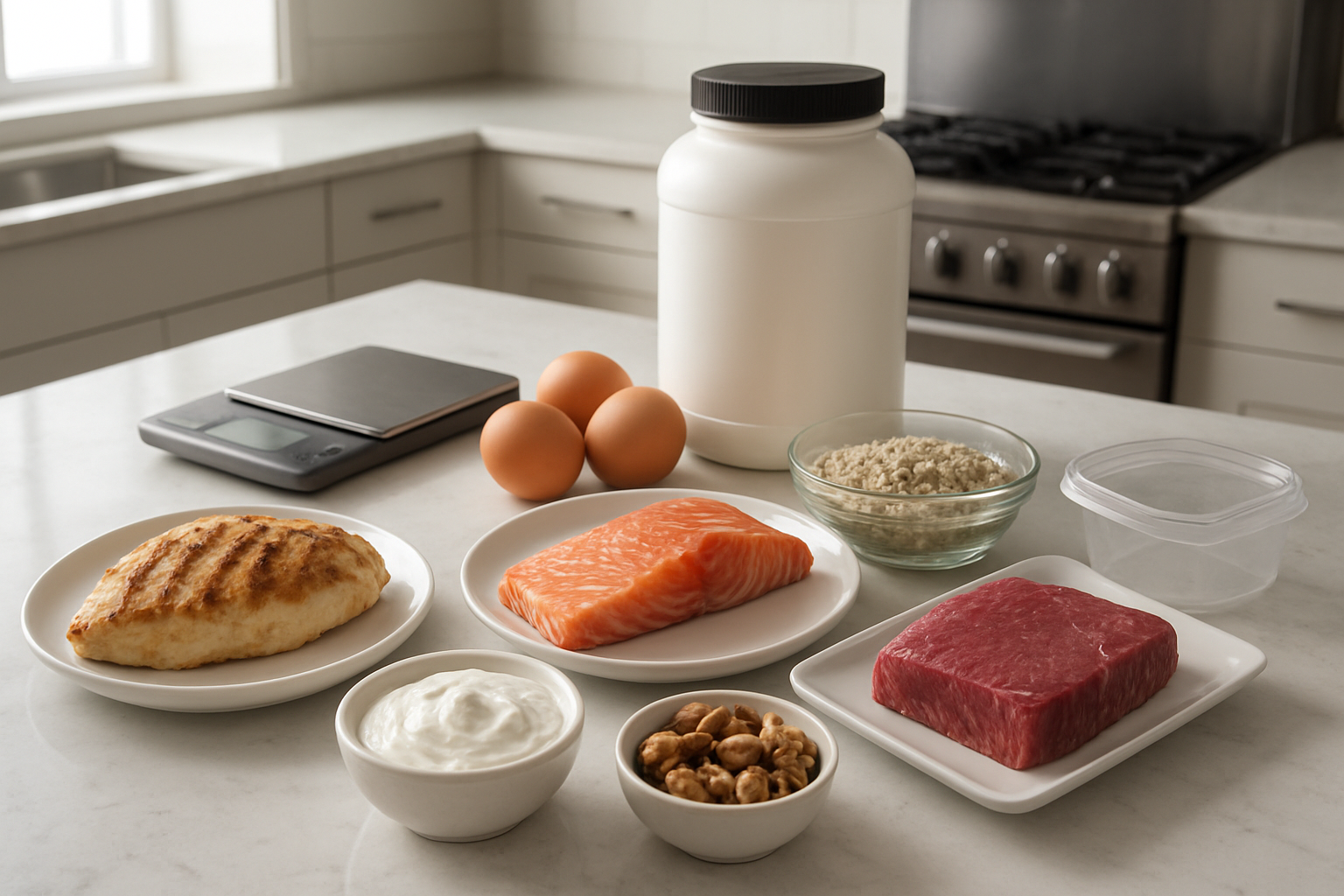
Consume 25-30 Grams of Protein Per Meal
Now that we’ve covered the fundamentals of creating a calorie deficit while preserving muscle mass, optimizing your protein intake becomes crucial for successful body recomposition. Research indicates that consuming 0.25 to 0.3 grams of protein per kilogram of body weight within two hours post-exercise can significantly increase muscle development. For most individuals pursuing muscle building while losing fat, this translates to approximately 25-30 grams of protein per meal.
The key lies in understanding that muscle protein breaks down continuously in the human body, making adequate protein consumption essential for rebuilding and building more muscle tissue. When you’re following a calorie deficit for fat loss, maintaining this consistent protein intake becomes even more critical to preserve your hard-earned lean muscle mass.
For optimal results, aim to distribute this 25-30 gram target across your main meals. A person weighing 175 pounds should consume approximately 125 grams of protein daily for muscle building, which can be easily achieved by hitting this per-meal target. This approach ensures your muscles receive a steady supply of amino acids throughout the day, supporting both muscle preservation during fat loss and muscle growth during your strength training sessions.
Choose High-Quality Lean Protein Sources
With your protein targets established, selecting the right protein sources becomes paramount for effective body recomposition. The best protein sources for building muscle while losing fat are lean animal meats and plant-based options that provide complete amino acid profiles without excess calories.
Animal-Based Protein Sources:
- Poultry: 3 oz of turkey contains approximately 25 grams of protein, making it an ideal single-serving option
- Fish: 3 oz of salmon provides about 22 grams of protein along with beneficial omega-3 fatty acids
- Eggs: One large hardboiled egg delivers 6 grams of protein, allowing for flexible meal planning
- Greek yogurt and cottage cheese: Excellent sources that combine protein with calcium for bone health
Plant-Based Protein Considerations:
Plant-based proteins like beans, tofu, and lentils offer viable alternatives for vegetarians and vegans pursuing body recomposition. However, understanding amino acid completeness becomes crucial. There are 20 amino acids, nine of which are essential and must be obtained through diet since the body cannot produce them.
Animal proteins naturally contain all nine essential amino acids, making them complete proteins. Plant sources often require strategic combining to achieve complete amino acid profiles. For instance, rice and beans together create a complete protein, while quinoa serves as a complete protein on its own.
Distribute Protein Evenly Throughout the Day
Previously, many fitness enthusiasts believed they needed to consume protein immediately after workouts, but current research suggests a more flexible approach. While eating protein within an hour or two of training with a regular meal can support muscle repair and growth, the bigger picture of total daily protein distribution matters more for body recomposition success.
Strategic Distribution Guidelines:
- Spread your total daily protein intake across 4-6 meals
- Aim for 20-30 grams per eating occasion
- Include protein with each main meal and snack
- Focus on consistency rather than precise timing
As long as your daily protein intake reaches the recommended 0.7 grams per pound of body weight for muscle building, you’re positioned for success. If you’re overweight and trying to reduce calories while preserving muscle, consider increasing to 0.8 to 1 gram of protein per pound of body weight. This higher intake, combined with proper strength training, helps ensure you’re primarily losing fat rather than the strength and muscle mass you’ve worked to develop.
Practical Implementation Tips:
- Plan protein sources for each meal during weekly meal prep
- Use protein-rich snacks like Greek yogurt or hard-boiled eggs between meals
- Consider high-quality protein powders for convenience, especially when busy or traveling
- Look for third-party certifications like NSF Certified for Sport when choosing supplements
Remember, consuming adequate protein in conjunction with strength training creates the optimal environment for muscle growth while maintaining the calorie deficit necessary for fat loss. This balanced approach to protein distribution supports your body recomposition goals without requiring extreme measures or complicated timing protocols.
Implement Strategic Strength Training

Perform Resistance Exercise at Least Twice Weekly
For optimal body recomposition workout plans, the foundation of your strength training approach begins with consistent frequency. Research demonstrates that you can see significant improvement in your strength with just two or three 20- or 30-minute strength training sessions per week. The Department of Health and Human Services recommends doing strength training exercises for all major muscle groups at least two times a week to support muscle building while losing fat.
This minimum frequency allows your muscles adequate time to recover between sessions, which is crucial for muscle growth and strength gains. When you strength train for body recomposition, you’re essentially creating controlled muscle damage that triggers protein synthesis – the process that builds new muscle tissue. Without proper recovery time, you risk overtraining and compromising your results.
The beauty of this twice-weekly approach is its sustainability. Many people attempting body recomposition make the mistake of overcommitting to excessive training schedules that become impossible to maintain long-term. By focusing on quality over quantity, you can build a sustainable fat loss muscle gain routine that fits into your lifestyle while still delivering impressive results.
Progressive Overload for Continuous Muscle Development
Now that we’ve established the importance of consistent training frequency, let’s explore the fundamental principle that drives continuous muscle growth: progressive overload. This concept is essential for strength training for fat loss and muscle gain simultaneously.
Progressive overload involves gradually increasing the demands placed on your muscles over time. Research shows that when you can easily do more repetitions of a certain exercise, you should gradually increase the weight or resistance. This principle ensures your muscles continue adapting and growing rather than plateauing.
The most effective approach to progressive overload focuses on taking your muscles to fatigue – meaning you can’t lift another repetition with proper form. Studies indicate that a single set of 12 to 15 repetitions with the proper weight can build muscle efficiently and can be as effective as three sets of the same exercise, as long as you reach muscular fatigue.
For body recomposition purposes, this translates to:
- Strength Focus: Aim for 1 to 5 reps at 85% to 100% of your one-rep maximum
- Hypertrophy Focus: Complete 6 to 12 reps at 75% to 85% of your one-rep maximum
- Rest Periods: 3 to 5 minutes for strength training, 60 to 90 seconds for hypertrophy training
The key is listening to your body and progressing systematically. If a strength training exercise causes pain, stop immediately and consider trying a lower weight or revisiting the exercise after a few days of recovery.
Essential Exercises for Maximum Muscle Building
With progressive overload principles in mind, exercise selection becomes critical for maximizing your body recomposition results. The most effective approach involves compound exercises that work multiple muscle groups and joints simultaneously, promoting both muscle growth and efficient calorie burning.
Primary Compound Movements:
| Exercise | Muscle Groups Targeted | Benefits for Body Recomposition |
|---|---|---|
| Squats | Legs, glutes, core | High calorie burn, functional strength |
| Deadlifts | Posterior chain, core | Full-body engagement, metabolic boost |
| Bench Press | Chest, shoulders, triceps | Upper body mass, pushing strength |
| Rows | Back, biceps, rear delts | Postural balance, pulling strength |
| Shoulder Press | Shoulders, triceps, core | Overhead stability, functional power |
These exercises should form the foundation of your lean muscle mass building routine because they:
- Engage multiple muscle groups simultaneously for maximum efficiency
- Promote uniform muscle growth across your body
- Improve overall functional strength for daily activities
- Generate higher calorie expenditure during and after workouts
Equipment Options for Every Situation:
Your muscle building while losing fat program can be adapted to various settings and equipment availability:
- Body Weight: Pushups, pullups, planks, lunges, and squats require no equipment
- Free Weights: Barbells and dumbbells offer versatile resistance options
- Resistance Bands: Lightweight, portable, and effective for maintaining routines while traveling
- Weight Machines: Provide stability and safety, especially for beginners
Previously, we discussed the importance of proper form and technique. When implementing these essential exercises, remember that controlled movements and proper breathing are crucial for both safety and effectiveness. If you’re new to strength training, working with a trainer initially can help establish correct form patterns that will serve you throughout your body recomposition journey.
The combination of compound movements, progressive overload, and consistent frequency creates the perfect storm for simultaneous muscle gain and fat loss, making your training time maximally efficient for achieving your body recomposition goals.
Build a Sustainable Lifestyle Approach

Balance Strength Training with Cardiovascular Exercise
Now that we’ve covered the fundamental training protocols, creating a sustainable body recomposition approach requires balancing resistance training with cardiovascular exercise. The reference research clearly demonstrates that both endurance and resistance-type exercise help preserve muscle mass during weight loss, with resistance training providing the additional benefit of improving muscle strength.
When pursuing simultaneous muscle gain and fat loss, resistance training should form the foundation of your exercise program. This type of training directly stimulates muscle protein synthesis and helps maintain lean body mass even during calorie restriction. However, incorporating cardiovascular exercise enhances overall physical function and supports the fat loss component of body recomposition.
The key is finding the right balance. Excessive cardiovascular exercise can interfere with muscle building and recovery, while too little may limit fat loss progress. A strategic approach involves 3-4 resistance training sessions per week combined with 2-3 moderate cardiovascular sessions. This combination maximizes the benefits of both training modalities while allowing adequate recovery time for muscle growth.
Focus on Whole Foods and Nutrient Density
With this foundation in mind, nutrition quality becomes paramount for sustainable body recomposition. The research emphasizes that adequate protein intake helps preserve lean body and muscle mass during weight loss, but it’s crucial to avoid excessive amounts that could have adverse effects on metabolic function.
Building a sustainable approach means prioritizing nutrient-dense whole foods that support both muscle preservation and fat loss. This includes lean protein sources, complex carbohydrates, healthy fats, and micronutrient-rich vegetables and fruits. These foods provide the essential building blocks for muscle protein synthesis while maintaining satiety during calorie restriction.
Quality protein sources should be distributed throughout the day to optimize muscle protein synthesis. However, the research warns against excessive protein intake, suggesting that adequate amounts are sufficient for muscle preservation without compromising metabolic health. Whole foods naturally provide the optimal balance of macronutrients and micronutrients needed for sustainable body recomposition.
The focus on whole foods also supports long-term adherence. Processed foods often lack the satiety and nutritional density needed to maintain energy levels and muscle mass during a calorie deficit. By emphasizing nutrient density, you create a eating pattern that naturally supports both fat loss and muscle preservation.
Track Progress Beyond the Scale
Previously, many individuals focused solely on weight loss as their primary metric, but sustainable body recomposition requires a more comprehensive approach to progress tracking. The research reveals that diet-induced weight loss reduces muscle mass without adversely affecting muscle strength, and weight loss improves global physical function primarily due to reduced fat mass.
Understanding these research findings means recognizing that the scale doesn’t tell the complete story during body recomposition. You may maintain or even gain weight while simultaneously losing fat and building muscle. This is why tracking multiple metrics becomes essential for assessing true progress.
Body composition measurements, strength progression, and physical function improvements serve as more accurate indicators than weight alone. The research shows that weight loss improves global physical function, including the ability to lift items, walk, and climb stairs, primarily because of reduced fat mass rather than total weight reduction.
Practical tracking methods include progress photos, body measurements, strength benchmarks, and how you feel during daily activities. These metrics provide a more complete picture of your body recomposition progress and help maintain motivation when the scale doesn’t reflect your efforts.
The research demonstrates that people with obesity have more muscle mass but poor muscle quality compared to those with normal weight. This insight highlights why focusing on muscle quality and function, rather than just muscle mass or body weight, creates a more sustainable and health-focused approach to body recomposition.

Body recomposition offers a sustainable path to transforming your physique by simultaneously gaining muscle and losing fat. Unlike traditional dieting that focuses solely on weight loss, this approach prioritizes changing your body composition through strategic strength training at least twice per week and maintaining adequate protein intake of 25-30 grams per meal. By creating a moderate calorie deficit while preserving muscle mass, you’ll achieve lasting results that go beyond what the scale shows.
The key to success lies in consistency and patience. Focus on slowly increasing your weights by no more than 10% each week, distribute protein-rich foods like eggs, chicken, and lentils throughout your daily meals, and remember that muscle is metabolically active tissue that will help you burn more calories long-term. Body recomposition isn’t just a temporary fix—it’s a lifestyle approach that builds a healthier, stronger, and more resilient body for years to come.