


If you want to eat healthier without giving up delicious food, the Mediterranean diet might be just what you need. Imagine starting your day with a fresh vegetable omelet cooked in olive oil, enjoying a colorful salad for lunch, and finishing with grilled fish and roasted veggies for dinner.
These simple, tasty meals not only satisfy your taste buds but also boost your energy and well-being. You’ll discover easy Mediterranean diet examples that fit into your daily routine, helping you feel great while enjoying every bite. Ready to transform your meals and your health?
Keep reading to find practical ideas you can start using today.
Key Foods
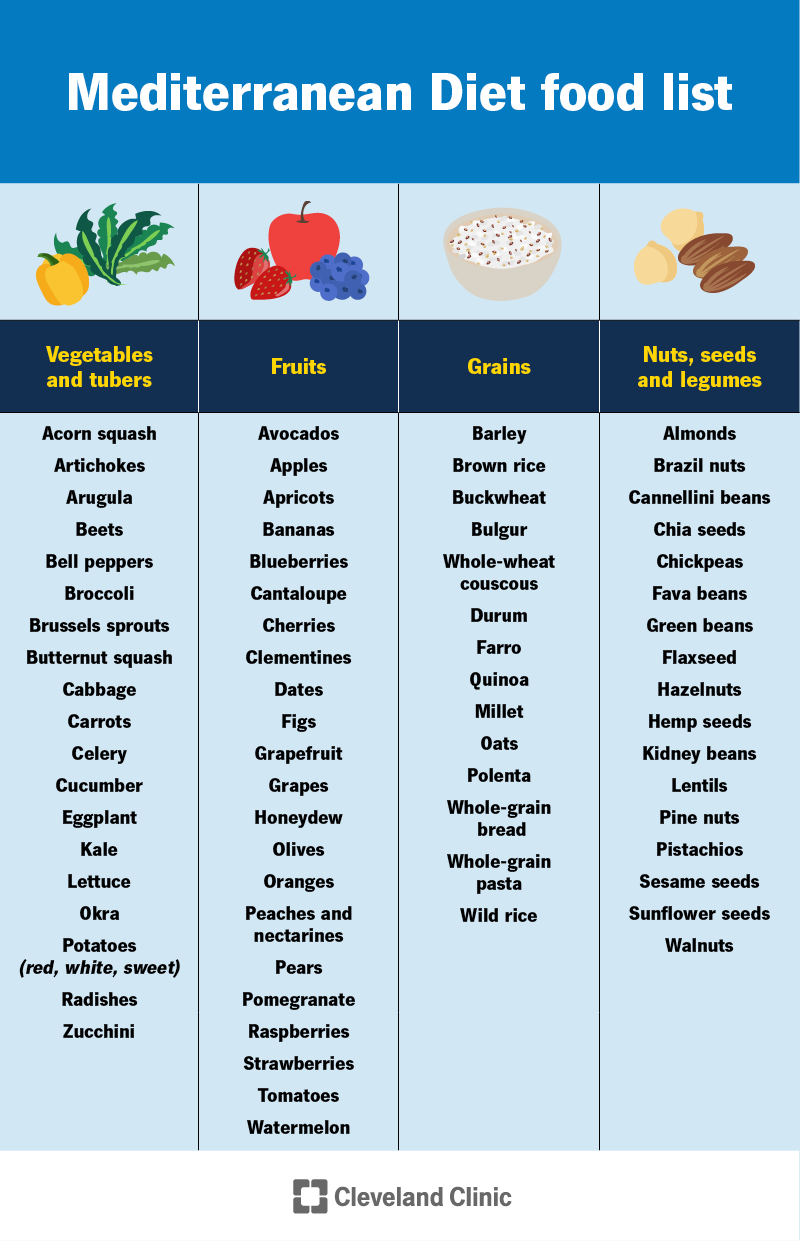
The Mediterranean diet focuses on fresh, natural foods that promote health and vitality. These key foods create a balanced, flavorful eating pattern. They support heart health and overall well-being. Understanding these foods helps you plan nutritious meals with ease.
Plant-based Staples
Vegetables and fruits are the foundation of this diet. Whole grains like quinoa, barley, and whole wheat provide energy. Legumes such as beans and lentils add protein and fiber. Nuts and seeds offer crunch and healthy nutrients. These foods are rich in vitamins and antioxidants.
Healthy Fats
Extra virgin olive oil is the main fat used in cooking and dressings. It contains monounsaturated fats that support heart health. Avocados also contribute healthy fats and creamy texture. These fats help reduce inflammation and improve cholesterol levels.
Lean Proteins
Seafood like salmon, sardines, and mackerel supply omega-3 fatty acids. Poultry is eaten in moderation, providing lean protein without excess fat. Eggs are included for their protein and essential nutrients. These options support muscle health and brain function.
Limited Red Meat
Red meat is eaten sparingly, usually a few times a month. When chosen, lean cuts are preferred. This limitation helps reduce saturated fat intake. It promotes better heart health and lowers disease risk.
Moderate Dairy
Dairy is consumed in small amounts, mainly as cheese and yogurt. Greek yogurt is popular for its probiotics and protein. Cheese adds flavor but is used sparingly. These foods support bone health without adding excess fat.
Herbs And Spices
Fresh herbs like basil, oregano, and rosemary enhance flavor naturally. Spices such as cinnamon, cumin, and garlic add depth to dishes. They reduce the need for salt. These ingredients boost antioxidants and improve digestion.
Credit: www.themediterraneandish.com
Breakfast Ideas
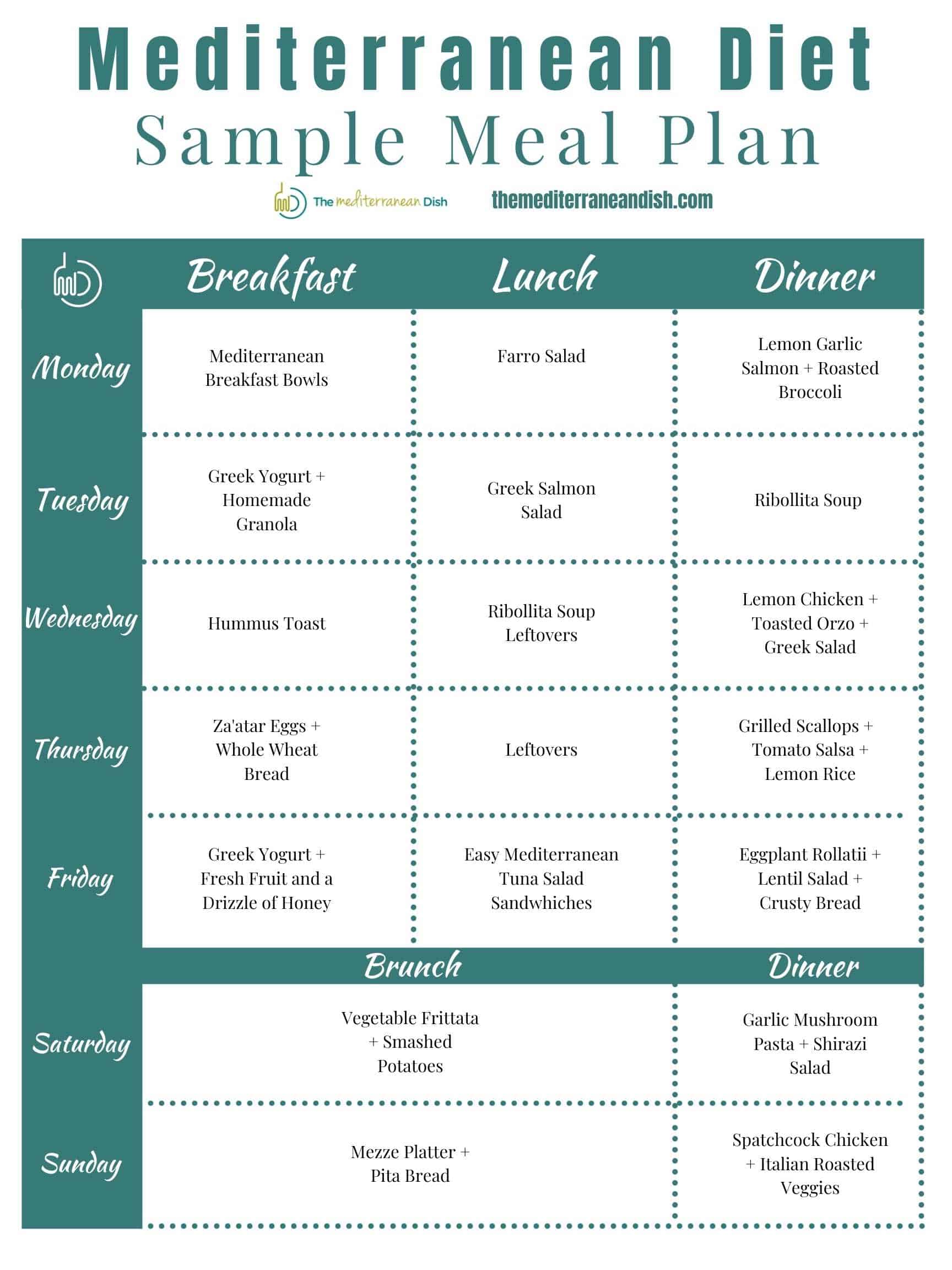
Breakfast sets the tone for the day on the Mediterranean diet. It focuses on fresh, wholesome ingredients full of flavor and nutrition. Meals are simple yet satisfying, offering a balance of protein, healthy fats, and fiber. These breakfast ideas show how easy and tasty Mediterranean mornings can be.
Vegetable Omelet
A vegetable omelet is a great start to the day. Use eggs as your base and add spinach, tomatoes, and mushrooms. Cook in olive oil for healthy fats and rich flavor. This meal provides protein and vitamins to keep you energized. It is quick to make and perfect for busy mornings.
Whole-grain Toast
Whole-grain toast is a staple in the Mediterranean diet. Top it with ricotta cheese, sliced tomatoes, and a drizzle of olive oil. This combination delivers fiber, calcium, and antioxidants. The toast adds crunch and keeps you full longer. It pairs well with a cup of herbal tea or black coffee.
Greek Yogurt With Berries
Greek yogurt with berries offers a sweet and creamy breakfast option. Choose plain Greek yogurt for protein and probiotics. Add fresh berries like strawberries, blueberries, or raspberries for natural sweetness and antioxidants. This dish is easy to prepare and supports digestive health. A handful of nuts on top adds crunch and healthy fats.
Lunch Options
Lunch offers a great chance to enjoy fresh and healthy Mediterranean flavors. Meals focus on vegetables, legumes, whole grains, and healthy fats. These dishes are simple to prepare and full of nutrients. Here are some delicious Mediterranean lunch options that keep you energized and satisfied.
Bean And Vegetable Salad
This salad mixes beans like chickpeas or cannellini with fresh vegetables. Tomatoes, cucumbers, and bell peppers add crunch and color. Olive oil and lemon juice dress the salad lightly. Herbs such as parsley or basil bring a fresh aroma. This dish is rich in fiber and protein. It’s perfect for a light yet filling lunch.
Mixed Greens With Feta
Start with a base of mixed salad greens like spinach, arugula, and romaine. Add crumbled feta cheese for a creamy, salty touch. Olives and red onion slices enhance the Mediterranean flavor. Drizzle with olive oil and a squeeze of lemon. This salad is low in calories but high in vitamins. It’s a refreshing and easy lunch choice.
Mediterranean Grain Bowls
Grain bowls combine cooked whole grains such as quinoa, bulgur, or farro. Top with roasted vegetables like zucchini, eggplant, and cherry tomatoes. Add a handful of chickpeas or lentils for protein. Finish with a sprinkle of nuts or seeds and a drizzle of olive oil. Grain bowls are hearty and satisfying. They offer balanced nutrition and vibrant flavors.
Credit: my.clevelandclinic.org
Dinner Suggestions
Dinner is an important meal in the Mediterranean diet. It focuses on fresh ingredients and simple cooking methods. Meals are rich in vegetables, healthy fats, and lean proteins. Below are some easy and tasty dinner ideas to try.
Grilled Fish With Vegetables
Grilled fish is a staple in the Mediterranean diet. Choose fresh fish like sea bass or snapper. Grill it with olive oil, lemon, and herbs. Serve with a side of colorful vegetables such as zucchini, bell peppers, and tomatoes. This meal is light, flavorful, and packed with nutrients.
Pan-seared Salmon With Asparagus
Salmon is rich in omega-3 fatty acids. Pan-sear the salmon in olive oil until golden brown. Pair it with steamed or roasted asparagus. Add a squeeze of lemon juice for extra taste. This dish is quick to prepare and supports heart health.
Quinoa And Roasted Veggies
Quinoa is a protein-rich grain perfect for Mediterranean dinners. Roast a mix of vegetables like eggplant, carrots, and red onions with olive oil and herbs. Combine them with cooked quinoa for a filling, plant-based meal. This option is great for vegetarians and vegans.
Healthy Snacks
Healthy snacks play a key role in the Mediterranean diet. They help keep energy steady between meals. These snacks focus on natural, whole foods that provide nutrients and good fats. Simple choices can satisfy hunger and support overall health. Below are some tasty and nutritious snack options.
Nuts And Seeds
Nuts and seeds are rich in healthy fats, fiber, and protein. Almonds, walnuts, pistachios, and sunflower seeds make great snacks. They help improve heart health and reduce hunger. Eat a small handful to avoid excess calories. These snacks are easy to carry and enjoy anytime.
Fresh Fruit
Fresh fruit offers natural sweetness and important vitamins. Apples, oranges, grapes, and berries are popular Mediterranean choices. They provide fiber and antioxidants. Fruits also help keep you hydrated. Choose seasonal fruits for the best flavor and nutrition.
Vegetable Sticks With Dips
Crunchy vegetable sticks are a refreshing snack option. Carrots, cucumbers, bell peppers, and celery are common picks. Pair them with healthy dips like hummus or tzatziki. These dips add protein and flavor without excess fat. This snack supports digestion and adds color to your diet.
Meal Planning Tips
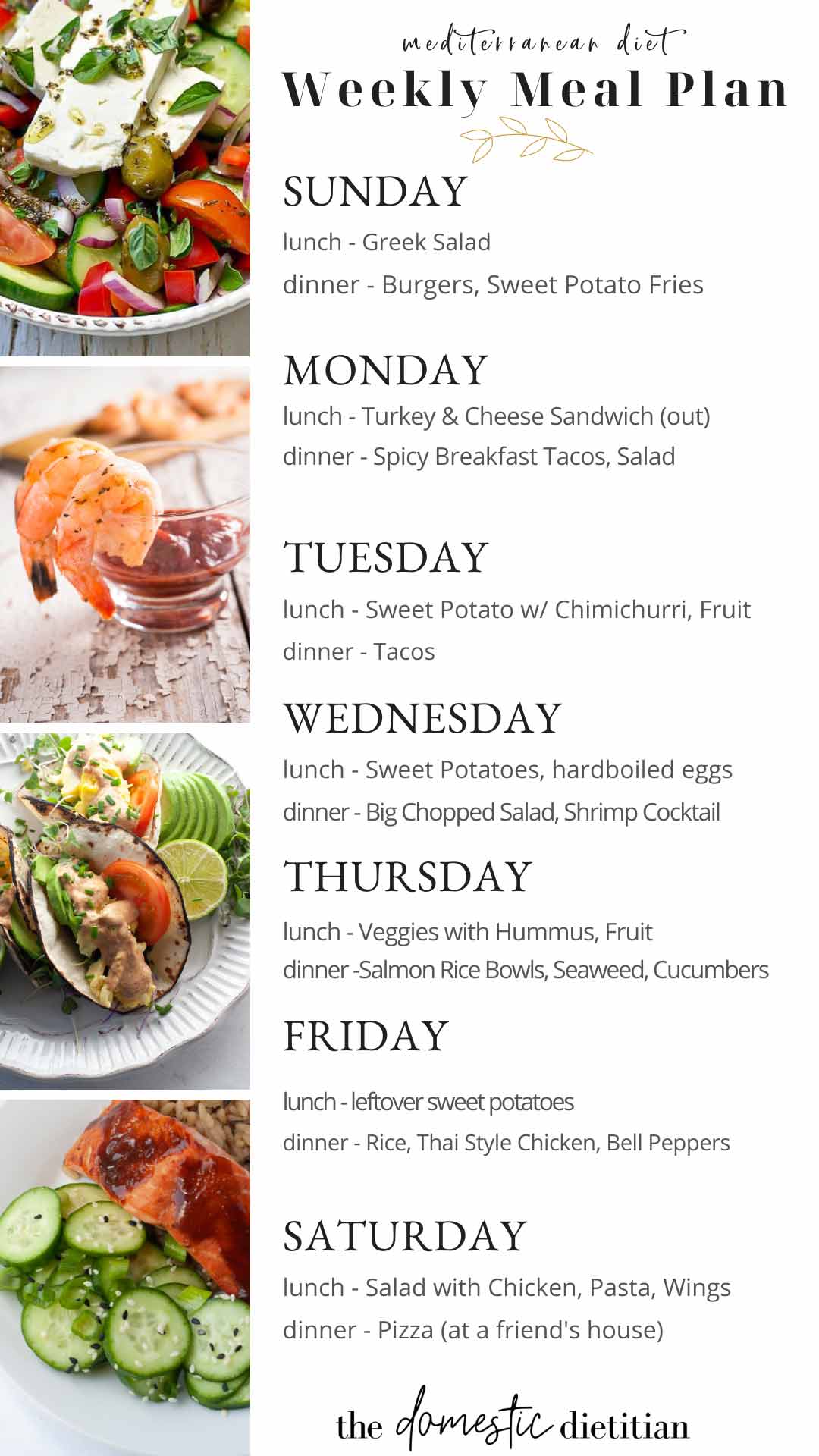
Meal planning is essential for following the Mediterranean diet successfully. Thoughtful preparation helps maintain balance and variety in daily meals. It also makes healthy choices easier and more enjoyable.
Focus on simple steps to create meals rich in flavor and nutrients. Planning ahead saves time and reduces stress during busy days. Here are key tips to guide your meal planning process.
Balancing Macronutrients
Include a good mix of carbohydrates, proteins, and fats in each meal. Whole grains and legumes provide healthy carbohydrates and fiber. Fish, poultry, and beans supply lean protein. Olive oil and nuts offer healthy fats that support heart health.
Aim for meals where plant-based foods dominate. Protein portions should be moderate, with an emphasis on seafood and plant proteins. Limit red meat and processed foods to occasional treats.
Using Olive Oil
Olive oil is a cornerstone of the Mediterranean diet. Use extra virgin olive oil as the main fat for cooking and dressing. It adds rich flavor and healthy monounsaturated fats.
Drizzle olive oil over salads, vegetables, and whole grains. Replace butter or margarine with olive oil in recipes. Its antioxidants help reduce inflammation and support overall health.
Incorporating Seasonal Produce
Choose fruits and vegetables that are in season for the best taste and nutrition. Seasonal produce is fresher, more affordable, and environmentally friendly.
Visit local markets to find a variety of colorful vegetables and fruits. Rotate your choices to enjoy different flavors and nutrients throughout the year. This practice keeps meals exciting and diverse.
Common Ingredients
The Mediterranean diet uses simple, fresh ingredients. These ingredients create meals full of flavor and nutrition. Most dishes rely on plant-based foods, healthy fats, and natural herbs. Understanding common ingredients helps you cook authentic Mediterranean meals.
Olive oil is the main fat source. Herbs add aroma and taste. Nuts and seeds provide crunch and healthy nutrients. These ingredients are easy to find and use every day.
Olive Oil Varieties
Extra virgin olive oil is the purest and healthiest type. It has a rich, fruity flavor. It is used for salad dressings, cooking, and dipping bread. Virgin olive oil is slightly less refined but still tasty. Light olive oil has a milder flavor and is good for baking. Each type adds a unique taste to dishes.
Popular Herbs
Basil, oregano, and thyme are common in Mediterranean recipes. They grow well in warm climates. Rosemary and parsley also add fresh, bright notes. Herbs often blend with garlic and lemon. This mix brings depth and zest to meals. Using fresh herbs enhances flavor without extra salt or fat.
Favorite Nuts And Seeds
Almonds, walnuts, and pine nuts are popular choices. They add texture and healthy fats to salads and main dishes. Sesame seeds and sunflower seeds appear in snacks and breads. Nuts and seeds support heart health and provide energy. A small handful makes a perfect snack or topping.
Credit: thedomesticdietitian.com
Conclusion
The Mediterranean diet offers simple, tasty meal options for everyone. It focuses on fresh fruits, vegetables, whole grains, and healthy fats. Including fish and poultry adds good protein without excess red meat. Small changes in daily meals can improve health and energy levels.
Try these examples to enjoy balanced, flavorful eating every day. This diet supports long-term wellness with natural, wholesome ingredients. Give it a chance and notice the positive effects on your body.