


Are you looking for a simple, effective way to eat healthier and feel better every day? The Mediterranean Diet Free Plan could be exactly what you need.
This way of eating focuses on fresh vegetables, fruits, whole grains, lean proteins, and heart-healthy fats—all delicious and easy to enjoy. Imagine enjoying meals that not only taste great but also support your weight, boost your energy, and protect your heart.
You’ll discover how to start the Mediterranean Diet without spending a dime on complicated meal plans or expensive ingredients. Ready to transform your eating habits and enjoy every bite? Keep reading to learn how you can make the Mediterranean Diet work for you, step by step.
Mediterranean Diet Basics
The Mediterranean diet is a simple and healthy eating style. It draws from the traditional foods of countries around the Mediterranean Sea. This diet focuses on fresh, natural ingredients and balanced nutrition. It supports heart health, weight control, and overall well-being.
Understanding the basics helps you follow this diet with ease. It encourages eating whole foods and healthy fats while limiting processed foods. The diet also promotes a relaxed and social approach to meals.
Core Food Groups
The Mediterranean diet centers on plant-based foods. Vegetables, fruits, whole grains, nuts, and legumes form the foundation. Fish and seafood provide lean protein several times a week. Poultry, eggs, and dairy appear in moderate amounts. Red meat is eaten only occasionally. Herbs and spices add flavor instead of salt.
Healthy Fats Focus
Healthy fats are key to this diet. Extra virgin olive oil is the main fat source. It helps lower bad cholesterol and supports heart health. Nuts and seeds add healthy fats and protein. Fatty fish like salmon provide omega-3 fatty acids. Avoid trans fats and limit saturated fats.
Typical Meal Structure
Meals usually start with vegetables or salad. A main dish follows, often including fish or legumes. Whole grains like brown rice or whole wheat bread accompany the meal. Meals are balanced with a mix of protein, fats, and carbohydrates. Snacks include fresh fruit, nuts, or yogurt. Water is the preferred drink, with moderate wine intake optional for adults.
Free Mediterranean Meal Plans
The Mediterranean Diet offers a simple and healthy way to eat every day. Free Mediterranean meal plans help you enjoy fresh, natural foods without stress. These plans focus on fruits, vegetables, whole grains, legumes, nuts, and olive oil. They include moderate amounts of fish, poultry, and dairy. Red meat and sweets are limited.
Using free meal plans makes it easy to follow the diet. You save time on planning and shopping. Meals stay balanced and tasty. This section shares sample ideas for breakfast, lunch, dinner, and snacks. Each option fits the Mediterranean style and supports good health.
Sample Breakfast Ideas
- Greek yogurt topped with honey and walnuts
- Whole-grain toast with avocado and cherry tomatoes
- Oatmeal with fresh berries and a sprinkle of flaxseed
- Scrambled eggs with spinach and feta cheese
Lunch Options
- Chickpea and cucumber salad with lemon dressing
- Whole-grain pita stuffed with grilled vegetables and hummus
- Quinoa salad with tomatoes, olives, and parsley
- Grilled chicken breast with mixed greens and olive oil
Dinner Recipes
- Baked salmon with roasted asparagus and garlic
- Vegetable stew with eggplant, zucchini, and tomatoes
- Whole-wheat pasta with olive oil, basil, and fresh tomatoes
- Stuffed bell peppers with brown rice and herbs
Snack Suggestions
- Fresh fruit like oranges, apples, or grapes
- A handful of almonds or walnuts
- Carrot and celery sticks with tzatziki sauce
- Olives or roasted chickpeas
Meal Planning Tips
Planning meals on the Mediterranean Diet Free Plan helps keep your diet healthy and enjoyable. Proper meal planning ensures balanced nutrition and saves time. It also supports steady energy throughout the day. Simple strategies make following this diet easier and more effective.
Balancing Proteins, Carbs, And Fats
Focus on including a variety of proteins, carbohydrates, and fats in each meal. Choose lean proteins like fish, beans, and poultry. Opt for whole grains such as brown rice and quinoa. Healthy fats from olive oil, nuts, and seeds are important. Keep portions moderate to maintain balance and avoid overeating.
Eating Schedule For Energy
Eat regularly to keep energy levels steady. Aim for three main meals and two or three small snacks daily. Space meals about three to four hours apart. This helps prevent hunger and energy dips. Include fruits or nuts as snacks for a quick, healthy boost.
Simplifying Meal Prep
Plan meals using a few key ingredients to reduce complexity. Cook in batches to save time during busy days. Prepare vegetables and proteins ahead and store them in the fridge. Use simple recipes with fresh ingredients to keep meals tasty and nutritious. This approach makes sticking to the diet easier.
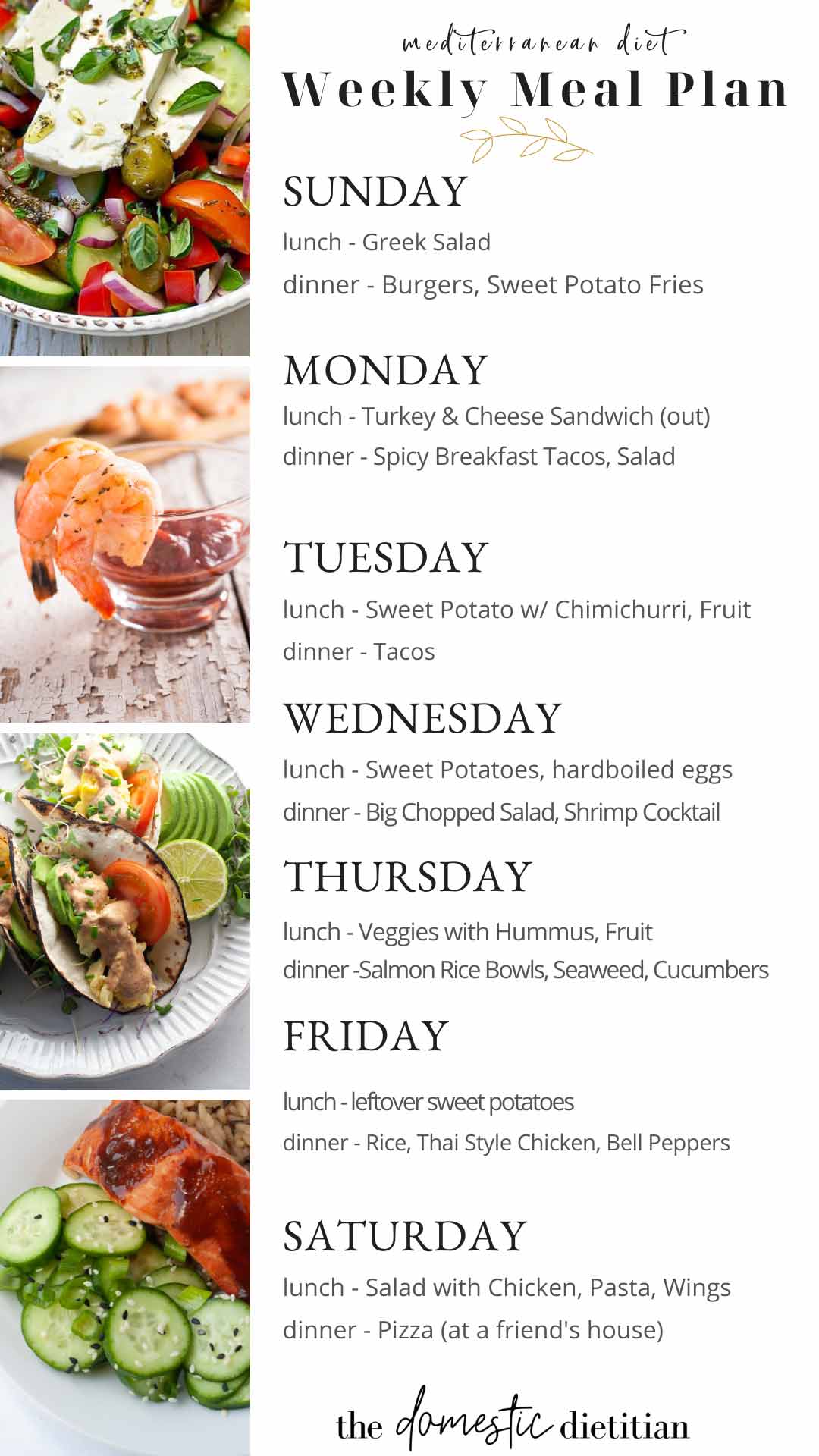
Credit: thedomesticdietitian.com
Exercise And Hydration
Exercise and hydration form the foundation of a healthy Mediterranean diet free plan. Both support your body’s natural functions and boost energy levels. Regular physical activity helps maintain a healthy weight and improves heart health. Staying hydrated keeps the body functioning well and aids digestion.
Quick Workouts To Boost Health
Short workouts can fit easily into any schedule. Try three sets of simple exercises like squats, push-ups, and stretches. Each set can have three repetitions. These moves raise your heart rate and strengthen muscles. No special equipment is needed, making it easy to stay active at home.
Walking briskly or cycling for 10 to 15 minutes daily also supports health. Exercise improves mood and helps your body use nutrients better. Consistency is more important than intensity for lasting benefits.
Importance Of Hydration
Drinking enough water is essential for digestion and toxin removal. Aim for one-third of your daily fluid intake as water. Herbal teas and water-rich fruits like watermelon also hydrate well. Dehydration can cause tiredness and reduce exercise performance.
Carry a water bottle to remind yourself to drink often. Avoid sugary drinks that add empty calories. Hydration supports clear skin, better focus, and overall well-being. Combine good hydration with exercise for the best results.
Weight Loss With Mediterranean Diet
The Mediterranean Diet is a popular choice for healthy weight loss. It focuses on natural, whole foods that nourish the body. This diet includes fresh vegetables, fruits, whole grains, and healthy fats. It also encourages lean proteins like fish and legumes. These foods support weight control and overall wellness.
Weight loss with the Mediterranean Diet happens by choosing nutrient-rich foods that keep you full. The diet avoids processed foods and added sugars, which helps reduce calorie intake. Eating balanced meals and practicing portion control are key factors. This plan is flexible and easy to follow, making weight loss manageable and sustainable.
Food Choices For Weight Control
Select fresh vegetables and fruits as the base of every meal. Whole grains such as brown rice, quinoa, and barley provide lasting energy. Include healthy fats from olive oil, nuts, and seeds to feel satisfied longer. Choose lean proteins like fish, beans, and poultry to build muscle and boost metabolism. Avoid processed snacks and sugary drinks that add empty calories.
Portion And Moderation Tips
Serve smaller portions to control calorie intake without feeling deprived. Use smaller plates to help reduce serving sizes naturally. Eat slowly and listen to hunger signals to prevent overeating. Limit high-calorie foods like cheese and sweets to occasional treats. Balance meals with a mix of protein, carbs, and fats to stay full and energized.
Health Considerations
The Mediterranean Diet Free Plan offers many health benefits. It emphasizes fresh vegetables, fruits, whole grains, and healthy fats. This plan supports heart health, weight management, and better digestion. Understanding health considerations is important before starting this diet. Proper guidance and consistency ensure safe and lasting results.
Consulting Professionals
Speak with your doctor before starting the Mediterranean diet. This is especially important if you have health issues. A nutritionist can help tailor the plan to your needs. They ensure the diet fits your lifestyle and medical conditions. Professional advice helps avoid nutrient deficiencies and unwanted side effects.
Consistency For Long-term Success
Stick to the Mediterranean diet regularly for best results. Small, steady changes create lasting habits. Skipping meals or cheating often can reduce benefits. Plan meals ahead to maintain balance and variety. Consistency improves energy levels and supports weight control. This approach helps keep your heart and body healthy.
Getting Started Easily
Starting a Mediterranean Diet Free Plan can feel simple and rewarding. The key is to focus on small, clear steps. These steps make the change easier to manage and keep you motivated. This section guides you through easy actions and common errors to avoid.
Simple First Steps
Begin by adding more vegetables and fruits to your meals. Choose whole grains like brown rice or whole wheat bread. Use olive oil instead of butter for cooking and dressing. Eat fish or seafood at least twice a week. Snack on nuts and seeds rather than processed snacks. Drink plenty of water daily to stay hydrated.
Plan your meals ahead. This reduces stress and helps you stick to the diet. Start with familiar recipes and slowly try new Mediterranean dishes. Keep your portions moderate to avoid overeating. Enjoy your food and eat slowly to notice when you feel full.
Common Mistakes To Avoid
Do not cut out all fats; healthy fats are important. Avoid relying too much on cheese and red meat. Do not skip meals or eat very little; this can slow metabolism. Avoid processed foods and sugary drinks as they harm your progress. Do not forget to balance your meals with proteins, carbs, and fats.
Do not rush the process. Sudden big changes can be hard to keep. Avoid comparing your journey to others. Focus on your own pace and progress. Stay consistent and patient for the best results.
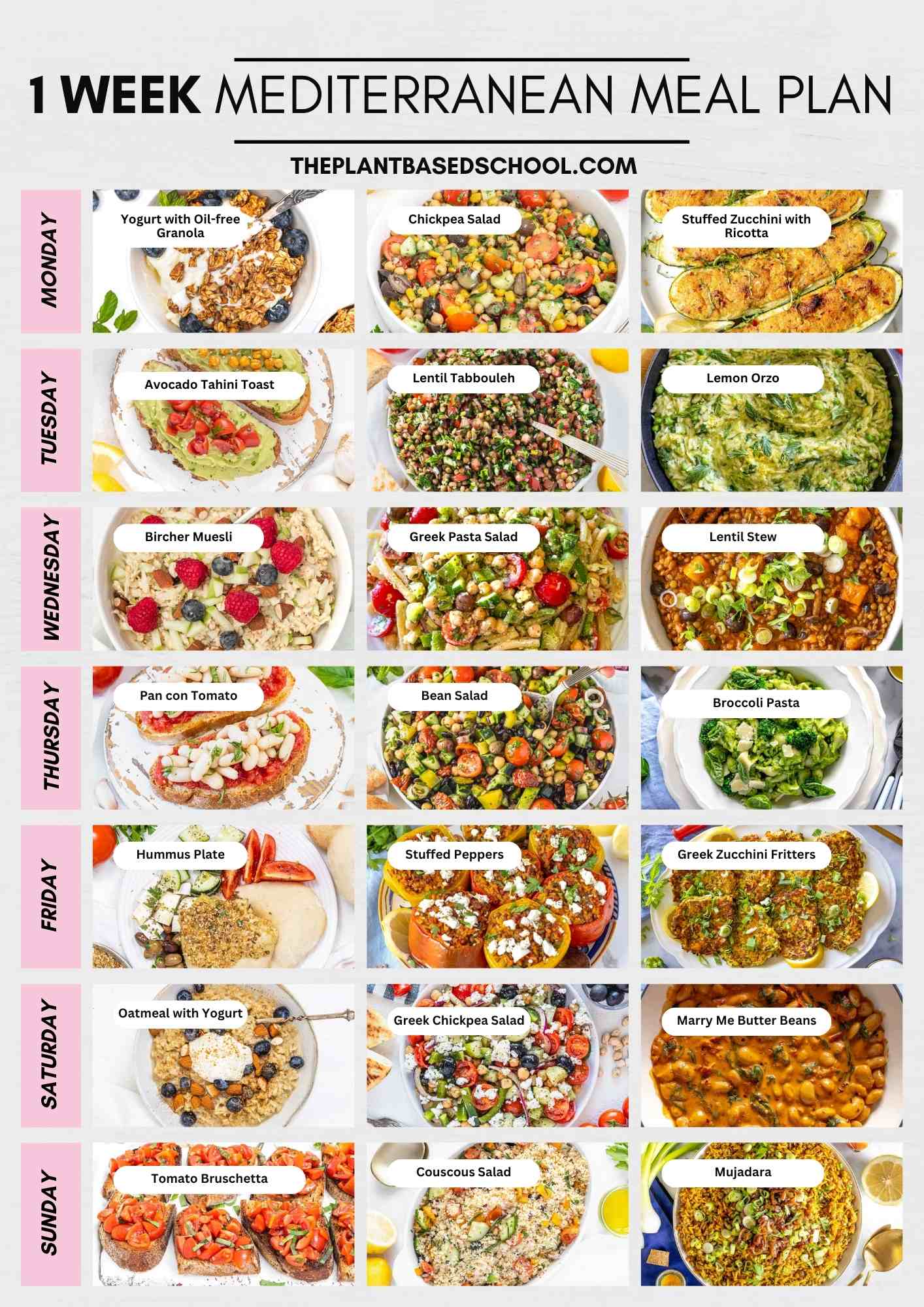
Credit: theplantbasedschool.com
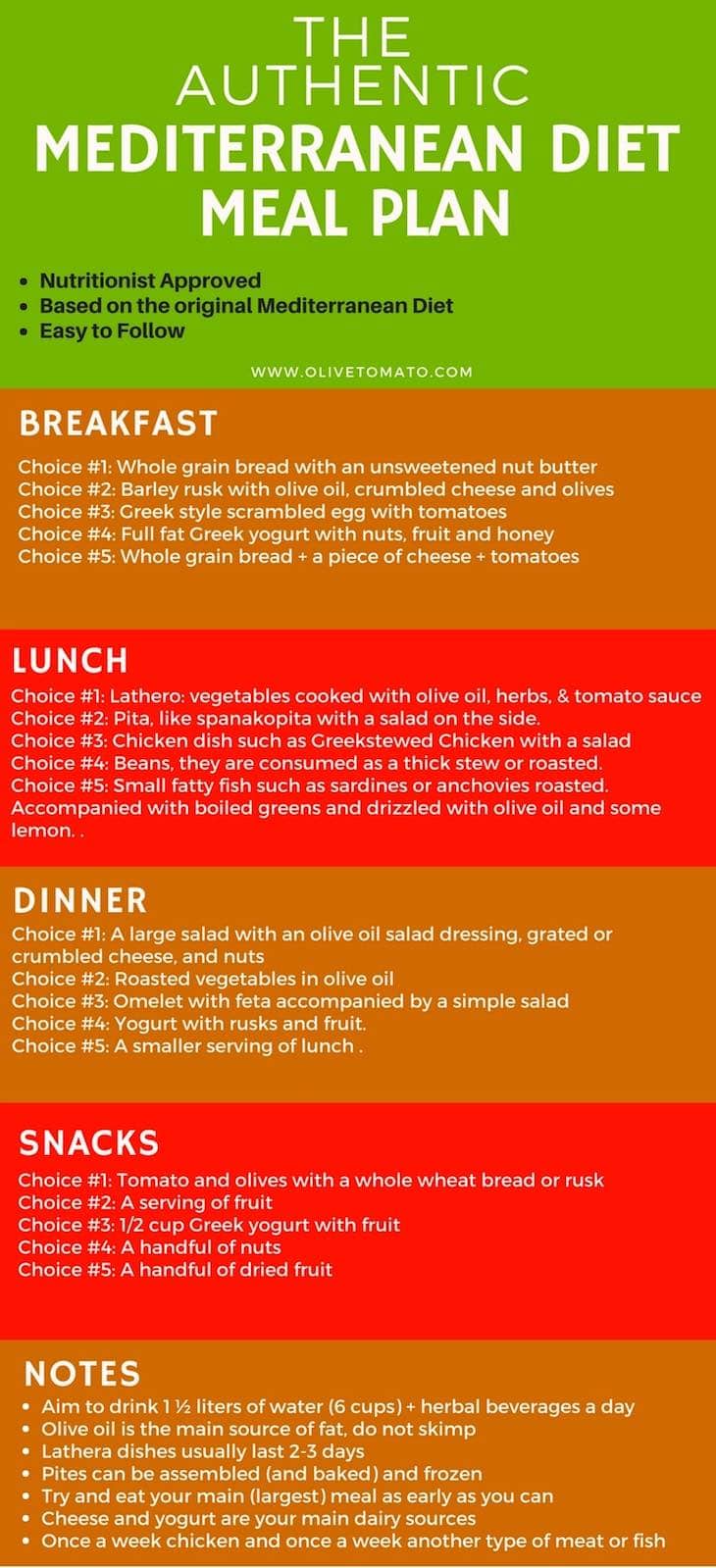
Credit: www.olivetomato.com
Conclusion
The Mediterranean Diet Free Plan offers simple, healthy eating ideas. It focuses on fresh vegetables, fruits, whole grains, and healthy fats. Eating balanced meals keeps energy steady throughout the day. Regular hydration and light exercise support overall well-being. Remember, small changes add up over time.
Stay consistent and enjoy the tasty, wholesome foods. This plan suits many lifestyles and helps improve health naturally. Start with easy meals and build habits that last. Your body and mind will thank you.