

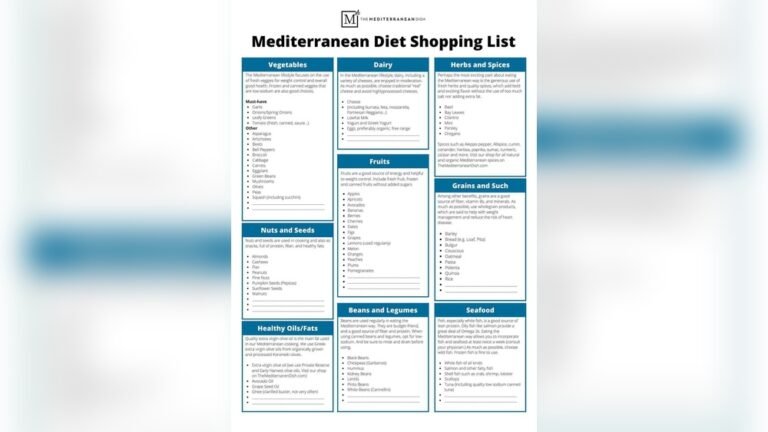
If you want to enjoy delicious meals that are good for your heart and packed with flavor, starting with the right Mediterranean food shopping list is key. Imagine filling your kitchen with fresh vegetables, juicy fruits, wholesome grains, and healthy fats like extra virgin olive oil—all staples of the Mediterranean way of eating.
Whether you’re new to this lifestyle or looking to simplify your grocery trips, this list will help you shop smart and eat well. Ready to discover the essential ingredients that bring vibrant, nutritious Mediterranean dishes to your table? Keep reading to find out exactly what to buy and why each item belongs in your cart.
:max_bytes(150000):strip_icc()/ultimate-med-diet-foods-list-01-e551ce039d4b4c94a0c24394af6e6705.jpg)
Credit: www.eatingwell.com
Fresh Vegetables
Fresh vegetables are the heart of Mediterranean cooking. They bring color, flavor, and nutrients to every meal. Choosing a variety ensures balanced nutrition and vibrant dishes.
These vegetables are often eaten raw, roasted, or lightly cooked to keep their natural taste and health benefits.
Leafy Greens
Leafy greens like spinach, kale, and arugula are staples. They add a fresh, slightly bitter taste to salads and sides. Rich in vitamins A, C, and K, they boost immunity and bone health. Use them in salads, wraps, or sautéed with garlic and olive oil.
Tomatoes And Peppers
Tomatoes and peppers add sweetness and a bit of heat. Choose ripe, juicy tomatoes for salads and sauces. Bell peppers come in red, yellow, and green varieties, perfect for roasting or grilling. Both are high in antioxidants and vitamin C, supporting skin and eye health.
Root Vegetables
Root vegetables such as potatoes, sweet potatoes, and carrots provide energy and fiber. They are often roasted or boiled in Mediterranean recipes. Sweet potatoes add a natural sweetness and are rich in beta-carotene. Carrots bring crunch and color, enhancing any dish.
Seasonal Fruits
Seasonal fruits bring fresh taste and vibrant colors to your Mediterranean food shopping list. These fruits are at their peak in flavor and nutrition. Choosing seasonal options supports local farmers and reduces your carbon footprint. Enjoy the natural sweetness and variety that each season offers. Incorporate these fruits into salads, desserts, or as healthy snacks to brighten your meals.
Berries And Citrus
Berries like strawberries, blueberries, and raspberries shine in spring and early summer. They add a burst of antioxidants and vitamins. Citrus fruits such as oranges, lemons, and mandarins dominate winter months. Their zesty flavors refresh dishes and drinks. Both berries and citrus are low in calories and rich in fiber.
Stone Fruits And Grapes
Stone fruits include peaches, plums, apricots, and nectarines. These juicy fruits peak in the summer months. Grapes, sweet and easy to eat, also thrive in warm seasons. Stone fruits and grapes are perfect for snacks, salads, or light desserts. They offer vitamins A and C, plus natural sugars for energy.
Exotic Choices
Exotic fruits add unique flavors and textures to your Mediterranean diet. Figs, pomegranates, and dates are popular choices in this region. They are rich in fiber, antioxidants, and minerals. Use them in salads, with cheese, or as natural sweeteners in recipes. These fruits often appear in autumn and winter markets.
Herbs And Spices
Herbs and spices bring life and flavor to Mediterranean dishes. They create rich aromas and taste without extra calories. Using the right herbs and spices makes meals fresh and vibrant. This section covers the must-have herbs and spices for your shopping list.
Fresh Herbs
Fresh herbs add bright, natural flavors to salads and cooked meals. Basil, parsley, and mint are staples in Mediterranean kitchens. Dill and cilantro also add unique, fresh notes. Use fresh herbs to garnish dishes or mix into sauces. Keep them in the fridge to maintain freshness.
Dried Herbs
Dried herbs offer convenience and long shelf life. Oregano and thyme are popular dried herbs in Mediterranean cooking. Rosemary and marjoram add depth to roasted vegetables and meats. Crush dried herbs lightly before use to release their aroma. Store in airtight containers away from light.
Essential Spices
Spices enhance the warm, earthy flavors typical of Mediterranean food. Ground cumin and coriander add subtle spice and complexity. Paprika brings a smoky, sweet touch to many dishes. Cinnamon and nutmeg appear in savory and sweet recipes. Keep a small collection of these spices for versatile cooking.
Healthy Fats
Healthy fats are key to the Mediterranean diet’s benefits. They support heart health and reduce inflammation. These fats also help absorb vitamins and keep you full longer.
Focus on natural sources of fat rather than processed oils. This helps maintain balance and nutrition in your meals. Choose fats rich in monounsaturated and polyunsaturated fats for the best effects.
Extra Virgin Olive Oil
Extra virgin olive oil is the cornerstone of Mediterranean cooking. It contains antioxidants and healthy fats that improve cholesterol levels. Use it for cooking, salad dressings, or dipping bread. Look for cold-pressed, unrefined varieties for maximum health benefits.
Nuts And Seeds
Nuts and seeds provide essential fatty acids and fiber. Almonds, walnuts, and pistachios are popular choices. Seeds like flaxseed, chia, and sunflower add crunch and nutrition. Eat them raw or lightly toasted to keep nutrients intact.
Olives
Olives are a tasty source of healthy fat and antioxidants. They come in many varieties and add flavor to dishes. Choose olives packed in water or olive oil rather than brine for less sodium. Snacking on olives can satisfy hunger and boost heart health.
Whole Grains
Whole grains form a key part of the Mediterranean diet. They provide fiber, vitamins, and minerals needed for good health. Whole grains help keep you full and support digestion. They bring natural flavors and textures to meals. Choose whole grains over refined ones for better nutrition and taste.
Quinoa And Oats
Quinoa is a small grain rich in protein and fiber. It cooks quickly and works well in salads or as a side dish. Oats are another great whole grain. Use them for breakfast as oatmeal or in baking. Both quinoa and oats have a mild flavor that blends well with many foods.
Farro And Barley
Farro has a chewy texture and nutty taste. It is excellent in soups and grain bowls. Barley is a versatile grain that adds bulk and nutrition to dishes. It absorbs flavors well and cooks to a tender texture. Both grains are traditional in Mediterranean cooking and provide lasting energy.
Whole-grain Breads And Pasta
Whole-grain breads have more fiber and nutrients than white bread. They support heart health and digestion. Choose whole-grain pasta for a filling, healthy meal. It pairs perfectly with vegetables, olive oil, and seafood. Whole-grain breads and pasta bring a wholesome touch to your Mediterranean meals.
Legumes And Beans
Legumes and beans form a key part of the Mediterranean diet. They offer rich protein, fiber, and essential nutrients. These plant-based foods are versatile and fit well into many dishes. They help keep meals healthy and filling without heavy fats or processed ingredients.
Including legumes and beans in your shopping list means you can prepare tasty stews, salads, and side dishes. They also help maintain steady energy throughout the day. Their natural flavors blend beautifully with Mediterranean herbs and spices.
Chickpeas And Lentils
Chickpeas are popular in Mediterranean recipes like hummus and salads. Lentils cook quickly and absorb flavors well. Both are excellent sources of protein and fiber. These legumes support heart health and digestion. Their mild taste makes them easy to add to many meals.
Cannellini And Peas
Cannellini beans have a creamy texture and light flavor. They work well in soups and pasta dishes. Peas add a touch of sweetness and freshness. Split peas are great for thick, hearty soups. These legumes boost your intake of vitamins and minerals.
Canned Vs. Dried Options
Canned legumes save time and are ready to eat after rinsing. They are convenient for quick meal prep. Dried beans need soaking and longer cooking but cost less. They often have a better texture and flavor after cooking. Choose based on your schedule and recipe needs.
Protein Sources
Proteins form an essential part of the Mediterranean diet. They provide energy and support muscle health. The diet emphasizes lean and healthy protein options. These choices come mainly from seafood, poultry, dairy, and eggs. Each source offers unique nutrients that benefit overall wellness. Including a variety of these proteins keeps meals balanced and flavorful.
Seafood Selections
Seafood is a cornerstone of Mediterranean cuisine. Fish like salmon, tuna, and mackerel are rich in omega-3 fatty acids. Shrimp and sardines add variety and nutrients. Seafood supports heart health and brain function. Fresh or frozen options work well for daily meals. Aim to include seafood at least twice a week.
Poultry Choices
Chicken, especially breast meat, is a popular protein in the Mediterranean diet. It is lean and low in saturated fat. Turkey can also be a good alternative. Poultry pairs well with herbs and olive oil for healthy cooking. It provides essential amino acids without excess calories. Choose skinless cuts for a healthier option.
Dairy And Eggs
Dairy products like Greek yogurt and feta cheese add calcium and protein. These foods are often consumed in moderate amounts. Eggs are another versatile protein source. Pasture-raised eggs offer better nutrient profiles. Use eggs in salads, omelets, or baked dishes. Dairy and eggs contribute to a balanced Mediterranean plate.
Pantry Essentials
Building a well-stocked pantry is key for Mediterranean cooking. These essentials help create quick, healthy meals. They add rich flavors and nutrition to everyday dishes.
Keep your pantry organized with versatile items. They store well and complement fresh ingredients perfectly. Here are some must-haves to include.
Canned Tomatoes
Canned tomatoes are a staple in Mediterranean kitchens. They add depth and sweetness to sauces, soups, and stews. Choose whole or crushed tomatoes with no added salt. Their long shelf life makes them practical and convenient.
Use them to make classic dishes like shakshuka or pasta sauce. Their natural acidity balances rich flavors in many recipes. A few cans always come in handy.
Whole-grain Crackers
Whole-grain crackers provide a healthy crunch for snacks or appetizers. They pair well with cheese, hummus, or tapenade. Choose options with simple ingredients and no artificial additives.
These crackers bring fiber and nutrients to your diet. They also make quick bases for Mediterranean-style toppings. Stock a box to enjoy anytime.
Garlic And Onions
Garlic and onions form the flavor foundation of Mediterranean cooking. Their aroma and taste enhance almost every savory dish. Fresh garlic cloves and onions should always be available.
Use them in dressings, sautés, and marinades. They provide natural sweetness and a subtle bite. These pantry essentials brighten flavors and enrich meals effortlessly.
Optional Additions
Optional additions can enhance your Mediterranean food shopping list. They bring variety and add fun flavors to your meals. These extras are not essential but can make your dining experience richer.
They fit well with the main ingredients and keep the Mediterranean spirit alive. Think of them as delightful treats or small indulgences that complement healthy eating.
Red Wine
Red wine is a classic Mediterranean optional addition. It pairs beautifully with many dishes, especially grilled meats and cheeses. A moderate amount can be part of a balanced lifestyle. Choose dry red wines like Merlot or Cabernet Sauvignon for the best taste. Always enjoy it responsibly to keep health benefits.
Mediterranean Snacks
Mediterranean snacks add convenience and flavor to your day. Popular choices include olives, hummus, and roasted nuts. These snacks provide healthy fats and protein for quick energy. Sun-dried tomatoes and pita chips also make tasty options. Keep these snacks handy for a simple, satisfying bite anytime.
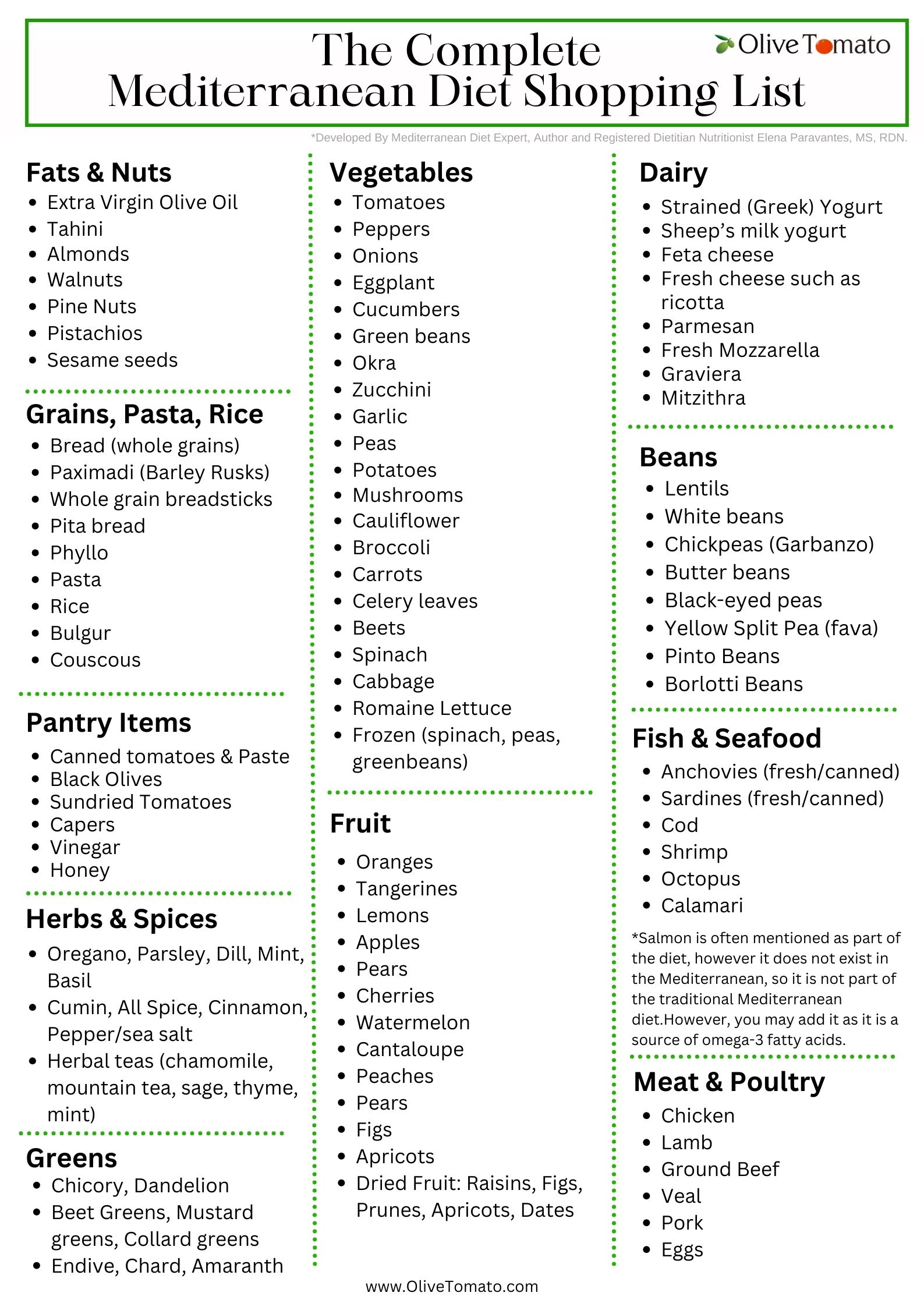
Credit: www.olivetomato.com
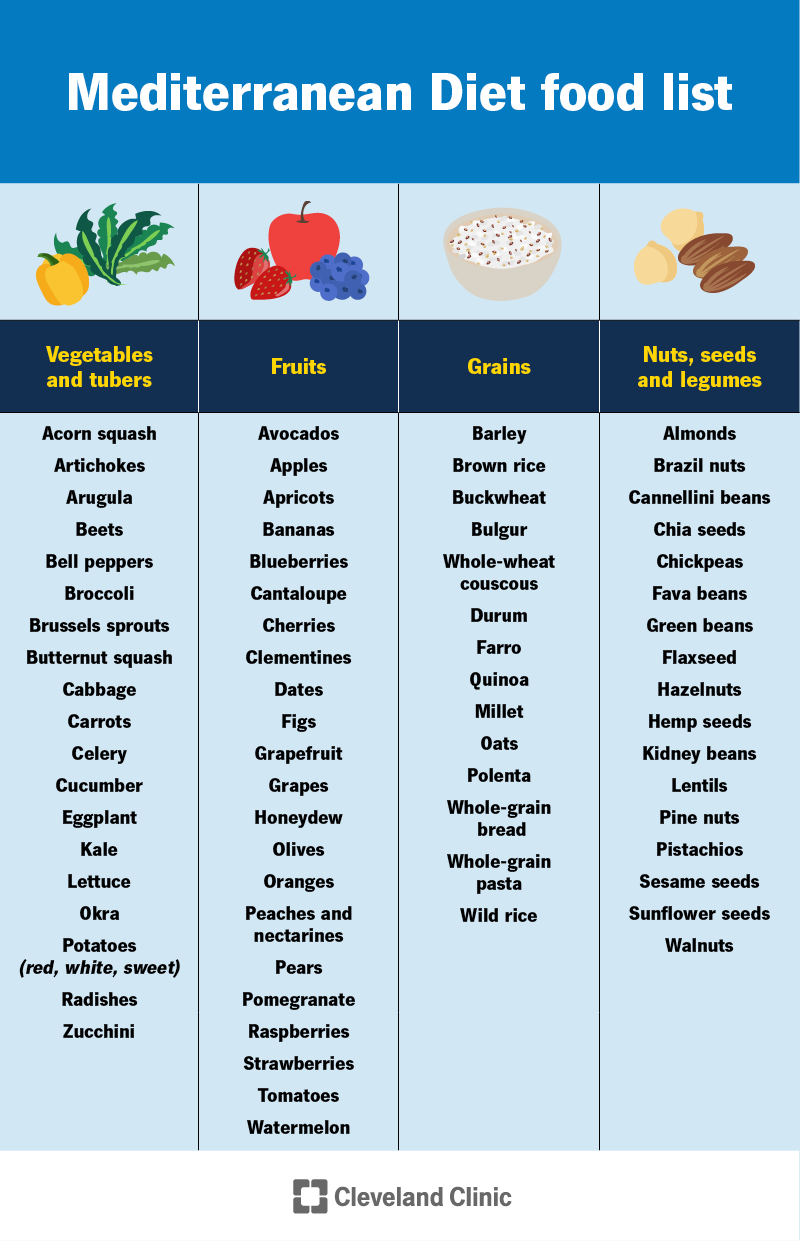
Credit: my.clevelandclinic.org
Conclusion
Choosing the right foods makes Mediterranean eating simple and tasty. Fresh vegetables, fruits, and herbs add great flavor and nutrition. Whole grains and legumes provide energy and fiber for your body. Healthy fats like olive oil and nuts support heart health.
Fish, poultry, and dairy offer good protein options. Use this shopping list to enjoy balanced, wholesome meals every day. Eating Mediterranean can be a healthy habit you easily keep. Small changes in your grocery cart lead to big health benefits.
Try these foods and feel the difference in your life.