

Have you ever wondered how obesity rates differ around the world? Understanding “Obesity Per Country” is more than just numbers—it reveals how lifestyle, culture, and environment shape health in every nation.
Whether you’re curious about where your country stands or want to see which places face the biggest challenges, this insight can change the way you think about health globally. Keep reading to discover surprising facts about obesity rates worldwide and learn what they mean for you and your community.

Credit: www.statista.com
Global Obesity Landscape
Obesity is a growing health challenge worldwide. It affects millions of people across various countries. Understanding the global obesity landscape helps highlight where the problem is most severe. It also sheds light on cultural and dietary factors that influence obesity rates. This knowledge is essential for creating effective health policies.
Top Countries By Obesity Rates
Some countries have alarmingly high obesity rates. Nauru leads with the highest percentage of obese adults. Other Pacific Island nations like Tonga and the Cook Islands also report high rates. The United States has the largest number of obese adults, though its overall percentage is lower than some smaller countries.
Regional Obesity Hotspots
Obesity rates vary greatly by region. The Pacific Islands show some of the highest numbers globally. In the United States, southern states like West Virginia and Mississippi have the highest obesity rates. Europe and parts of the Middle East show moderate to high levels of obesity. These hotspots often face unique economic and social challenges.
Cultural And Dietary Influences
Cultural habits strongly affect obesity rates. In many Pacific Islands, traditional diets have shifted to processed and imported foods. This change contributes to rapid weight gain. In the U.S., fast food and sedentary lifestyles play a major role. Dietary preferences, activity levels, and social norms all shape obesity trends worldwide.

Credit: statisticsanddata.org
Pacific Island Nations’ Crisis
The Pacific Island nations face an alarming obesity crisis. These countries have some of the highest obesity rates worldwide. The problem affects health, economy, and quality of life. Understanding specific country trends helps reveal the depth of this issue.
Nauru’s Leading Obesity Rate
Nauru holds the highest obesity rate on the planet. Over 60% of its adult population is obese. This extreme rate causes serious health problems. Heart disease and diabetes are common. Limited land and resources challenge healthy food production. The island relies heavily on imported foods. This dependence worsens the obesity crisis.
Tonga, Cook Islands, And Samoa Trends
Tonga, the Cook Islands, and Samoa also show high obesity rates. Around 50% of adults in these nations are obese. Traditional diets rich in fish and vegetables have changed. People now consume more processed and sugary foods. Physical activity levels have dropped due to urbanization. These shifts contribute to rising obesity numbers.
Impact Of Imported Foods
Imported foods play a major role in obesity rates. Processed snacks, sugary drinks, and fast food dominate diets. These products are often cheaper and easier to access. Local fresh foods are less available and more expensive. Imported foods contain high calories and low nutrients. This dietary change leads to weight gain and health issues.
Obesity In The United States
The United States faces a significant challenge with obesity. Millions of adults across the country struggle with weight issues. Obesity affects health, quality of life, and healthcare costs. Its prevalence varies widely across states and regions.
National Obesity Statistics
About 42% of U.S. adults are obese according to recent data. This marks a steady increase over the past decades. Obesity raises risks for diabetes, heart disease, and other illnesses. The Centers for Disease Control and Prevention (CDC) tracks these numbers yearly. The data helps guide public health efforts.
State-by-state Variations
Obesity rates differ greatly from state to state. Some states report rates above 35%, while others stay under 25%. These differences reflect local lifestyles, diets, and access to healthcare. Economic factors and education levels also play roles. Understanding these variations is key to targeting interventions.
Southern States’ High Rates
The Southern United States shows the highest obesity levels. States like West Virginia, Mississippi, and Louisiana often top the list. These states report adult obesity rates over 35%. Contributing factors include diet, physical activity, and socioeconomic challenges. Public health programs here focus on prevention and education.
Lower Rates In The Northeast
Northeastern states generally have lower obesity rates. States such as Massachusetts, New York, and New Jersey often report rates below 25%. Better access to healthcare and healthier lifestyles contribute to these lower numbers. Urban living and active transportation also help reduce obesity risks in this region.
Health And Economic Consequences
Obesity affects more than individual health. It creates a heavy toll on economies worldwide. Different countries face unique challenges from obesity’s health and economic effects. Understanding these consequences helps highlight the urgent need for action.
Medical Risks Associated With Obesity
Obesity raises the chance of many health problems. These include diabetes, heart disease, and stroke. High blood pressure and some cancers are also linked to obesity. Excess weight strains the body and reduces life quality. Children and adults alike suffer from these medical risks.
Economic Burden On Healthcare Systems
Obesity drives up healthcare costs in many countries. Treating related diseases requires more medical resources. Hospitals and clinics face growing demand for care and treatments. National health budgets strain under obesity-related expenses. This financial pressure limits funds for other health needs.
Long-term Societal Impact
Obesity affects workforce productivity and economic growth. Sick workers take more days off and perform worse on the job. Increased disability rates reduce labor force participation. Families face higher out-of-pocket costs and lower incomes. Societies must invest more in prevention and support programs.
Global Rankings And Data Sources
Understanding obesity rates across countries requires reliable data and clear rankings. Global rankings help identify which countries face the biggest challenges. Data sources vary and include international organizations and national reports. These sources collect, analyze, and publish information on obesity prevalence worldwide. They guide policymakers, health experts, and the public in addressing this growing health issue.
World Obesity Federation Insights
The World Obesity Federation offers detailed global obesity data. It tracks adult and childhood obesity rates by country. Their reports reveal trends and compare regions. Pacific Island nations often top obesity rankings. This federation uses standardized methods for accurate comparisons. Their data supports global health initiatives and research.
Cdc And Who Statistics
The Centers for Disease Control and Prevention (CDC) monitors obesity primarily in the United States. It provides state-by-state obesity statistics and trends over time. The World Health Organization (WHO) collects global health data, including obesity rates. WHO’s reports highlight differences between high-income and low-income countries. Both organizations use surveys and health records for data collection.
Key Data From National Reports
Many countries publish their own obesity statistics through health departments. These national reports offer detailed insights into regional and demographic patterns. For example, the U.S. shows higher obesity rates in southern states. Pacific Island nations report some of the highest obesity percentages worldwide. National data helps tailor health policies to specific populations.
Trends And Future Projections
Obesity rates vary widely across countries, reflecting diverse trends and future possibilities. Understanding these patterns helps predict health challenges and guide effective actions. Changes in society and environment shape these trends strongly.
Rising Obesity Rates Worldwide
Obesity rates are increasing in nearly every country. Both developed and developing nations face growing numbers of overweight adults and children. This rise strains healthcare systems and lowers life quality globally. Some Pacific Island countries report obesity rates above 60%, among the highest worldwide. The United States shows a steady increase, with nearly 40% of adults affected.
Impact Of Urbanization And Lifestyle Changes
Urban growth brings changes in diet and activity levels. Many people adopt sedentary jobs and consume high-calorie processed foods. Traditional diets rich in fruits and vegetables decline. Increased screen time and less physical exercise contribute to weight gain. These lifestyle shifts explain much of the obesity growth in cities. Rural areas are also seeing changes but at a slower pace.
Potential Policy Responses
Governments can introduce policies to slow obesity growth. Taxing sugary drinks and junk food reduces consumption. Promoting active transport like walking and cycling helps increase daily exercise. Schools can improve meal quality and encourage physical activity. Public health campaigns raise awareness about healthy eating. Early intervention programs support children and families to prevent obesity.
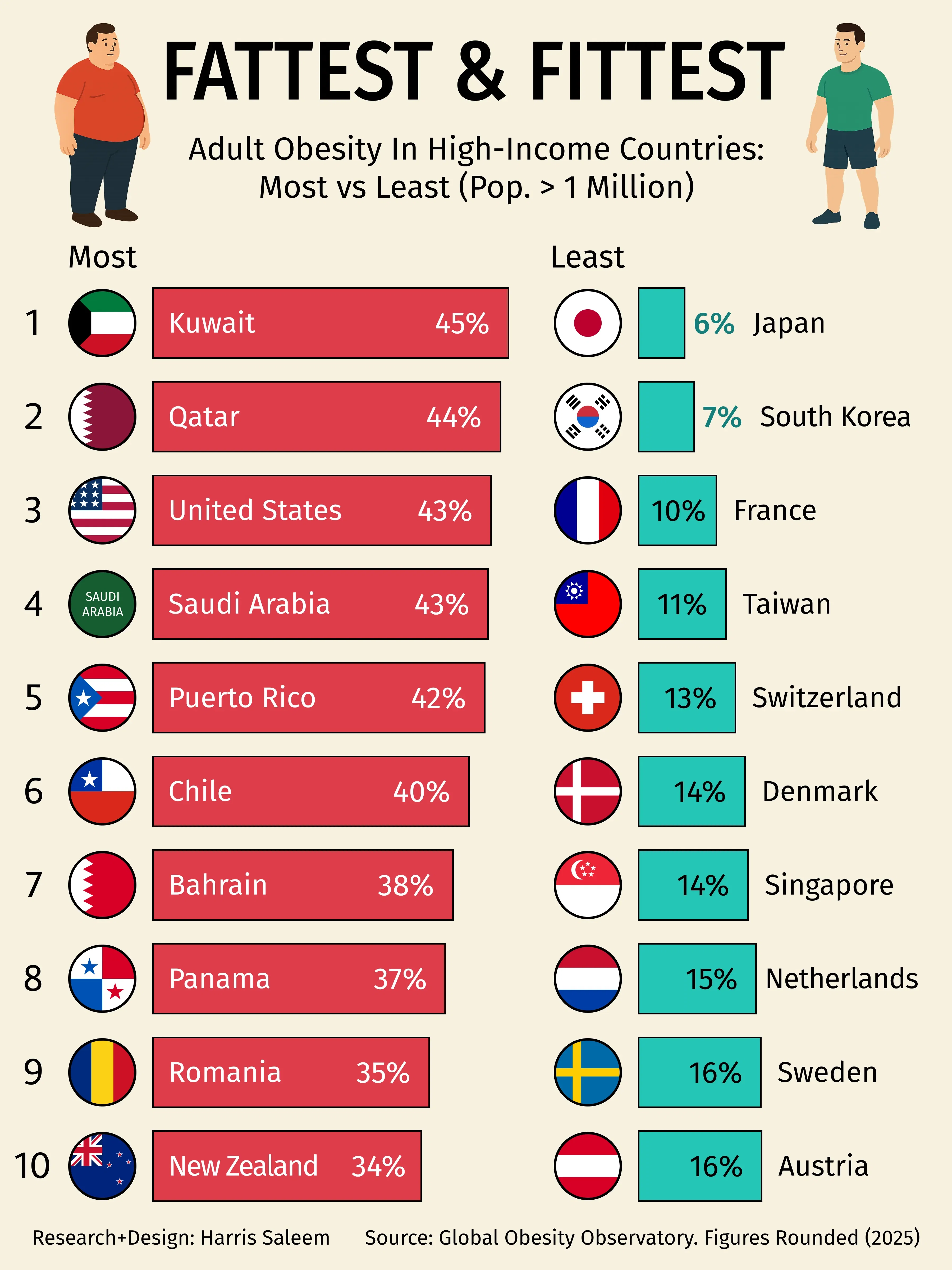
Credit: www.voronoiapp.com
Conclusion
Obesity rates differ widely across countries and regions. Pacific Island nations face some of the highest rates globally. The United States has many obese adults but not the highest percentage. Within the U. S. , states like West Virginia and Mississippi have the largest challenges.
Understanding these differences helps highlight where health efforts are needed most. Tackling obesity requires global and local attention. Small lifestyle changes can make a big difference over time. Awareness and action can improve health worldwide.