

Have you ever wondered how obesity affects people around the world? The percentage of obese individuals varies widely from one country to another, and understanding these differences can reveal surprising insights about lifestyle, culture, and health.
Your own country’s obesity rate might be higher or lower than you think, and knowing the facts can help you make smarter choices for your well-being. You’ll discover which countries have the highest and lowest obesity percentages, why these numbers matter, and what trends are shaping the global health landscape.
Keep reading to see where your home stands and how this information could impact your health journey.
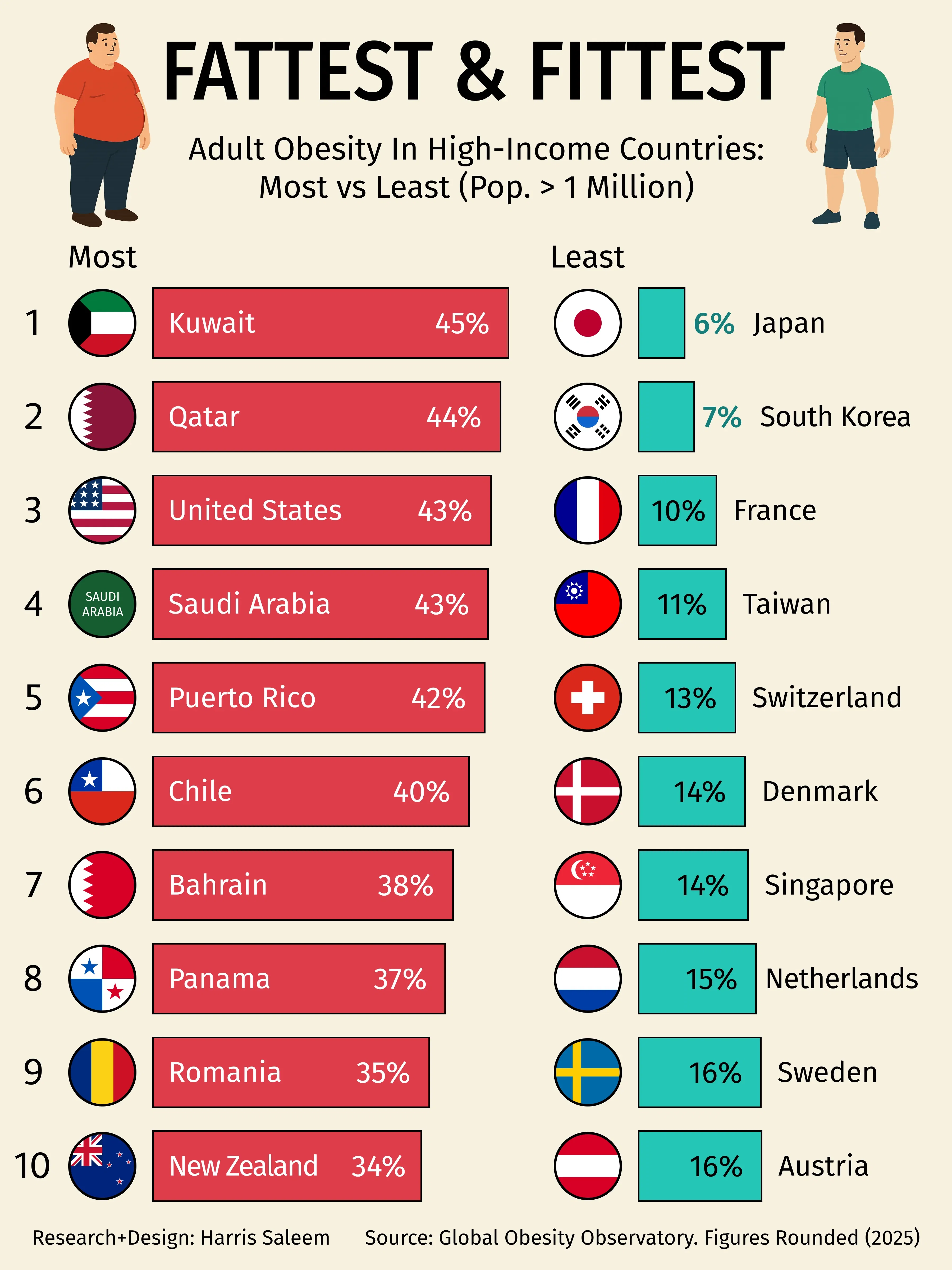
Credit: www.voronoiapp.com
Global Obesity Hotspots
Obesity affects many countries worldwide, but some regions stand out with the highest percentages. These global obesity hotspots reveal patterns linked to lifestyle, diet, and economic factors. Understanding these areas helps highlight where health challenges are most urgent.
Pacific Island Nations
Pacific Island nations have some of the highest obesity rates globally. Countries like Nauru, Tonga, and the Cook Islands lead with obesity percentages above 40%. Traditional diets have shifted to processed and imported foods. Limited access to fresh produce and high-calorie foods contribute to this crisis. Cultural preferences also play a role in rising obesity rates.
North America Trends
North America shows high obesity percentages, especially in the United States and Mexico. The US leads among OECD countries with over 38% obesity. Mexico follows with a rate near 32%. Fast food, sedentary lifestyles, and urban living influence these trends. Obesity rates also vary by region within countries, with southern US states showing higher rates.
Europe And Asia Contrasts
Europe and Asia display contrasting obesity patterns. Western Europe has moderate obesity rates, generally between 20% and 30%. Eastern Europe faces higher rates, sometimes exceeding 30%. Asian countries often report much lower obesity percentages, usually under 15%. Differences in diet, physical activity, and economic conditions explain these contrasts clearly.
Top Countries By Obesity Rates
Obesity rates vary greatly across countries. Some nations face serious challenges with high obesity percentages. Others maintain relatively low rates due to lifestyle and dietary habits. Understanding these differences helps highlight global health trends and risks.
Highest Percentages Worldwide
The highest obesity rates are mostly found in Pacific Island nations. Nauru leads with over 60% of adults classified as obese. Tonga, the Cook Islands, and Samoa also report rates above 50%. These rates stem from changes in diet and reduced physical activity.
In addition to the Pacific Islands, the United States shows a significant obesity rate. Around 38% of American adults are obese. Mexico follows with about 32%, ranking second among OECD countries. These high percentages reflect lifestyle and food environment factors.
Notable Low-obesity Countries
Some countries maintain low obesity rates due to traditional diets and active lifestyles. Japan and South Korea report obesity rates below 5%. These countries prioritize fresh vegetables, fish, and balanced meals.
Other countries with low obesity percentages include Ethiopia and Vietnam. Their diets focus on whole grains and low-calorie foods. Physical activity remains a regular part of daily life in these regions.
Factors Behind High Obesity Rates
Obesity rates differ greatly across countries. These differences result from many factors. Understanding these causes helps explain why some nations have higher obesity percentages. Several social, economic, and cultural elements influence obesity levels worldwide.
Cultural Influences
Culture shapes food choices and eating habits. Some cultures value large body sizes as a sign of wealth or health. Traditional meals may be high in fats and sugars. Social gatherings often center around food, encouraging overeating. Physical activity levels vary depending on cultural norms. In some countries, active lifestyles are less common, increasing obesity risk.
Dietary Shifts And Imported Foods
Many countries have shifted from local diets to processed and imported foods. These foods often contain high amounts of sugar, salt, and unhealthy fats. Fast food chains spread quickly, changing eating habits. Convenience foods replace fresh fruits and vegetables. This change leads to higher calorie intake and poor nutrition. Imported food products can be cheaper but less healthy.
Economic And Social Factors
Income levels affect diet and lifestyle choices. Low-income groups may choose cheaper, calorie-dense foods. Limited access to healthy foods increases obesity risk. Urbanization reduces physical activity due to sedentary jobs. Education also plays a role in understanding nutrition. Lack of health awareness leads to poor eating and exercise habits. Social stress and mental health issues can contribute to weight gain.

Credit: www.statista.com
Obesity In The United States
The United States faces a serious challenge with obesity. It has one of the highest obesity rates in the world. This health issue affects millions of adults and children. The impact on society and healthcare is significant. Many factors contribute to the high obesity percentage in the country.
Understanding obesity in the U.S. requires looking at differences by state, comparisons with other countries, and public health efforts. These areas show the complexity and scale of the problem.
State-by-state Variations
Obesity rates vary widely across U.S. states. Southern states often report the highest percentages. States like Mississippi and Alabama have some of the largest obesity rates. Northern and western states generally show lower numbers. These differences relate to lifestyle, income, and access to healthy foods. Local culture and education also influence obesity levels.
Comparison With Mexico And Other Oecd Countries
The U.S. has a higher obesity rate than Mexico. About 38% of American adults are obese. Mexico follows with roughly 32%. Among OECD countries, the U.S. leads in obesity. Other countries have lower percentages but still face rising rates. This comparison highlights the widespread nature of obesity in developed nations.
Impact Of Public Health Policies
Public health policies aim to reduce obesity rates in the U.S. Efforts include promoting healthy eating and physical activity. Some states have introduced taxes on sugary drinks. Schools work on improving nutrition and exercise programs. These policies have mixed success. Continued focus is necessary to make a lasting impact.
Gender And Regional Differences
Obesity rates vary widely across countries and populations. Gender and region play key roles in these differences. Understanding these patterns helps address the problem more effectively. Some groups face higher risks than others. Regional lifestyles and cultural factors also influence obesity levels.
Higher Rates Among Women
In many countries, women have higher obesity rates than men. This trend appears in both developed and developing nations. Hormonal changes, pregnancy, and social roles contribute to this gap. Women often face more barriers to physical activity. Access to healthy food options can also differ by gender. Social expectations may influence eating habits and body image.
Urban Vs Rural Obesity Patterns
Obesity rates differ between urban and rural areas. Cities often show higher obesity percentages due to lifestyle changes. Urban residents may consume more processed foods and lead sedentary lives. Rural areas sometimes have lower obesity rates but face rising trends. Limited access to fresh foods and healthcare affects rural populations. Both settings require tailored health strategies to reduce obesity.
Health Risks Linked To Obesity
Obesity has become a major health concern worldwide. High obesity rates in many countries raise alarms about the risks to public health. Excess body fat links directly to many serious health problems. Understanding these risks helps in addressing this growing epidemic.
Chronic Diseases
Obesity increases the chance of developing chronic diseases. These include type 2 diabetes, heart disease, and stroke. Excess weight causes high blood pressure and unhealthy cholesterol levels. It also raises the risk of certain cancers, such as breast and colon cancer. Many people with obesity suffer from sleep apnea and joint problems too. These conditions lower the quality of life and increase early death rates.
Economic Burden On Healthcare
Obesity creates a heavy economic burden on healthcare systems. Treatment of obesity-related diseases demands large medical resources. Hospitals and clinics face increased costs for medication, surgeries, and long-term care. These expenses strain public health budgets and insurance plans. Lost workdays and reduced productivity add to the financial impact. Countries with high obesity rates often spend billions yearly on healthcare linked to obesity. Managing this burden requires effective prevention and care strategies.
Global Initiatives And Solutions
Obesity affects millions worldwide and challenges health systems everywhere. Countries work hard to find solutions that lower obesity rates. Global initiatives focus on policies, programs, and education to promote healthier lives. These efforts aim to create environments that support better food choices and active living.
Sugar Taxes And Food Regulations
Sugar taxes help reduce sugary drink consumption. Many countries tax soda and sweetened beverages to cut obesity rates. Food regulations also limit unhealthy ingredients in processed foods. Clear labeling rules inform consumers about calories and sugar. These measures encourage companies to offer healthier options.
Community Health Programs
Local programs promote physical activity and healthy eating. Communities organize events like walking groups and nutrition classes. Support groups help people maintain weight loss goals. Access to parks and recreational spaces increases daily activity. These programs build habits that improve long-term health.
Role Of Education And Awareness
Education teaches people about nutrition and exercise benefits. Schools include health lessons to build good habits early. Public campaigns raise awareness about obesity risks and prevention. Knowledge empowers individuals to make smart lifestyle choices. Awareness leads to healthier communities and fewer obesity cases.

Credit: commons.wikimedia.org
Conclusion
Obesity rates differ widely across countries and regions. Pacific Island nations show the highest percentages. The United States has a high obesity rate but not the highest globally. Cultural habits, diet changes, and lifestyle impact these numbers significantly. Understanding these differences helps promote healthier choices worldwide.
Tackling obesity requires global attention and local action. Everyone benefits from better awareness and support for healthy living.