


Are you curious about what makes the Mediterranean diet so popular and effective? Understanding exactly what the Mediterranean diet consists of can help you make smarter food choices that boost your health and energy.
This diet isn’t just about losing weight—it’s about enjoying fresh, delicious meals that nourish your body and protect your heart. Imagine filling your plate with colorful fruits and vegetables, whole grains, nuts, and healthy fats like olive oil, while still savoring moderate amounts of fish and poultry.
Ready to discover how easy and satisfying this way of eating can be? Keep reading to learn the key foods, what to limit, and how to bring the Mediterranean lifestyle to your own kitchen.
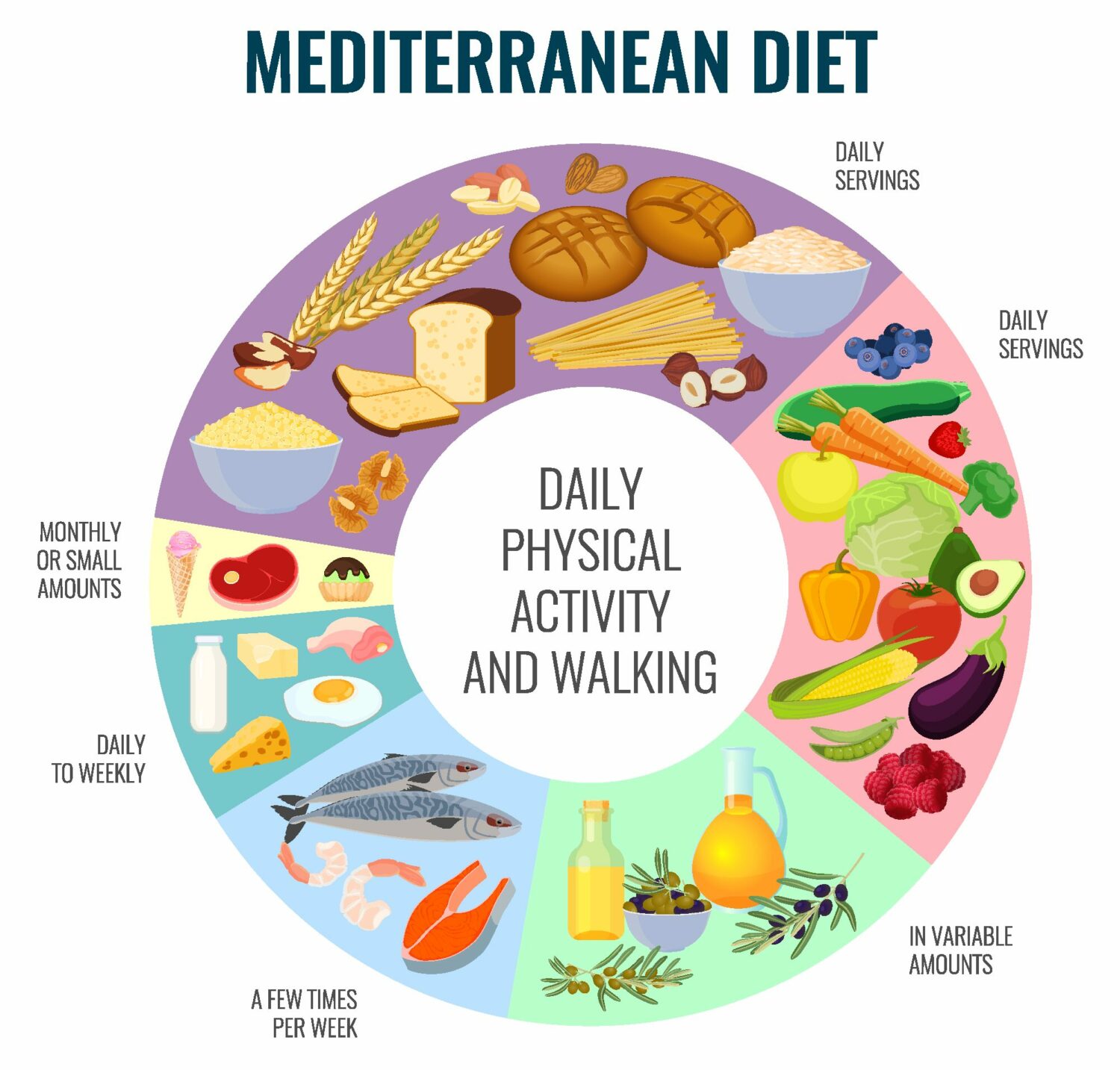
Credit: www.conwaymedicalcenter.com
Core Mediterranean Foods
The Mediterranean diet centers on wholesome, natural foods. These core foods provide essential nutrients and support overall health. Emphasizing plant-based items, healthy fats, and lean proteins creates a balanced eating pattern. This section details the key foods that form the foundation of the Mediterranean diet.
Fresh Fruits And Vegetables
Fresh fruits and vegetables are the diet’s cornerstone. Choose seasonal and colorful produce like tomatoes, spinach, apples, and oranges. They supply vitamins, minerals, and antioxidants. Eating a variety helps maintain good health and prevents diseases.
Whole Grains And Legumes
Whole grains include oats, brown rice, quinoa, and barley. They provide fiber and energy. Legumes such as beans, peas, and lentils add protein and fiber. These foods support digestion and keep blood sugar stable.
Nuts And Seeds
Nuts like almonds and walnuts offer healthy fats and protein. Seeds such as pumpkin and sunflower seeds add nutrients and crunch. A small handful daily improves heart health and reduces inflammation.
Healthy Fats And Oils
Extra virgin olive oil is the main fat source. It contains monounsaturated fats that boost heart health. Olives and avocados also provide healthy fats. These fats help absorb vitamins and keep the body energized.
Fish And Seafood
Fish and seafood are rich in omega-3 fatty acids. Choose salmon, sardines, and mackerel often. They support brain function and reduce heart disease risk. Aim for fish meals several times each week.
Poultry And Eggs
Poultry like chicken and turkey provide lean protein. Eggs offer essential nutrients and healthy fats. Consume these foods in moderation to balance protein intake without excess saturated fat.
Dairy Choices
Opt for moderate amounts of dairy such as yogurt and cheese. These provide calcium and probiotics for bone and gut health. Choose low-fat or fermented options to keep meals light and nutritious.
Foods To Limit
In the Mediterranean diet, certain foods should be eaten less often. Limiting these helps maintain good health and supports the diet’s benefits. These foods can increase the risk of chronic diseases and reduce the diet’s positive effects.
Sugary Sweets And Desserts
Sugary sweets and desserts contain high amounts of added sugars. Eating too many can lead to weight gain and blood sugar problems. Cakes, cookies, candies, and ice cream fall into this group. The Mediterranean diet suggests enjoying these only on special occasions.
Processed Foods
Processed foods often have added salt, unhealthy fats, and preservatives. These can harm heart health and increase inflammation. Examples include fast food, packaged snacks, and ready-made meals. Choosing fresh, whole foods is better for staying healthy.
Red And Processed Meats
Red and processed meats are linked to higher risks of heart disease and cancer. Limit intake of beef, pork, lamb, sausages, and deli meats. Instead, choose fish, poultry, or plant-based proteins more often. These choices support the Mediterranean diet’s health goals.
Flavor Enhancers And Drinks
Flavor enhancers and drinks play an important role in the Mediterranean diet. They add taste without extra calories or unhealthy ingredients. These elements make meals more enjoyable and help people stick to the diet. The use of fresh herbs, spices, and healthy drinks supports overall wellness and digestion.
Herbs And Spices
Herbs and spices add natural flavor and aroma to Mediterranean dishes. Common choices include basil, oregano, rosemary, thyme, and parsley. These herbs boost taste without salt or fat. Spices like cinnamon, cumin, and paprika also enrich meals with warmth and depth. Using fresh or dried herbs encourages healthy eating habits. They contain antioxidants that may support heart health and reduce inflammation.
Water And Moderate Alcohol
Water is the main drink in the Mediterranean diet. It keeps the body hydrated and supports all vital functions. People often drink water with meals and throughout the day. Moderate alcohol consumption is common, especially red wine. A small glass of red wine with dinner can be part of the lifestyle. Drinking in moderation means one glass per day for women and two for men. Alcohol should never replace water or be consumed in excess.
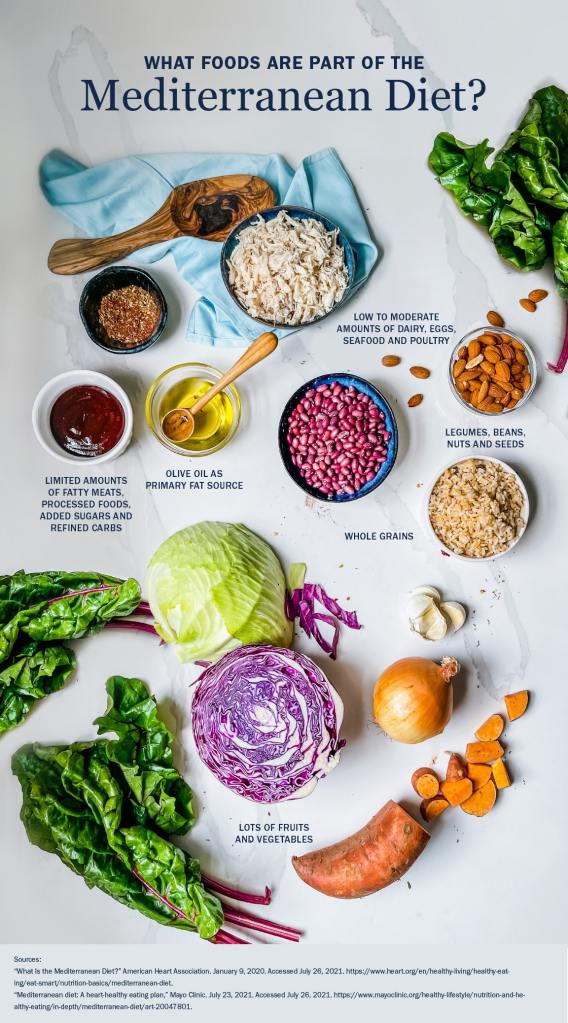
Credit: onlinemph.unc.edu
Health Benefits
The Mediterranean diet offers many health benefits due to its rich, natural ingredients. It supports overall well-being and helps the body function at its best. The diet focuses on whole foods that provide essential nutrients. These nutrients improve various body systems and protect against illnesses.
Heart Health
The Mediterranean diet is excellent for heart health. It includes healthy fats from olive oil and nuts. These fats help lower bad cholesterol levels. The diet also provides omega-3 fatty acids from fish, which reduce inflammation. Eating plenty of fruits and vegetables supplies antioxidants that protect the heart. Studies show this diet lowers the risk of heart disease and stroke.
Digestive Wellness
This diet promotes good digestion and gut health. High fiber from whole grains, fruits, and vegetables helps food move smoothly through the digestive tract. Fiber feeds good bacteria in the gut, improving digestion and immune function. Fermented dairy like yogurt adds probiotics that balance gut flora. A healthy gut reduces bloating, constipation, and other digestive problems.
Weight Management
The Mediterranean diet helps maintain a healthy weight. It focuses on nutrient-dense foods that keep you full longer. Healthy fats and fiber reduce hunger and prevent overeating. The diet avoids processed foods and excess sugar, which cause weight gain. Regular meals with balanced portions support steady energy and metabolism. This diet makes it easier to manage weight naturally.
Chronic Disease Prevention
Eating Mediterranean foods helps prevent chronic diseases. Antioxidants and healthy fats lower inflammation, a root cause of many illnesses. The diet reduces the risk of type 2 diabetes by improving blood sugar control. It also protects against certain cancers with its high intake of fruits and vegetables. This way of eating supports long-term health and lowers disease risk.
Tips For Daily Eating
Adopting the Mediterranean diet daily requires simple, practical habits. Small changes lead to better health and more enjoyment at meals. Focus on fresh, whole foods that nourish your body and satisfy your taste buds.
Try to prepare meals that include vegetables, whole grains, and healthy fats. Use olive oil generously to enhance flavor and add health benefits. Pay attention to portion sizes to maintain balance and avoid overeating.
Meal Planning Ideas
Plan your meals around vegetables and whole grains. Choose seasonal fruits and fresh greens for variety. Include legumes like beans or lentils at least a few times a week. Add fish or poultry a couple of times weekly for protein.
Prepare large batches of soups or salads to save time. Use leftovers creatively for lunches or quick dinners. Snack on nuts or fresh fruit instead of processed foods. Keep your pantry stocked with Mediterranean staples like olive oil and whole grains.
Cooking With Olive Oil
Use extra virgin olive oil as your main cooking fat. Drizzle it over salads and cooked vegetables for added flavor. Avoid heating olive oil to very high temperatures to keep nutrients intact. Stir-fry or roast foods gently in olive oil for the best results.
Replace butter or margarine with olive oil in recipes. Use it as a dip for fresh bread or a topping for grilled fish. Olive oil supports heart health and adds a rich, smooth taste to meals.
Balancing Portions
Fill half your plate with vegetables and fruits. Allocate one-quarter to whole grains like brown rice or quinoa. Reserve the remaining quarter for protein sources such as fish or beans. Use small bowls for nuts or seeds to control snack amounts.
Eat slowly and stop when you feel satisfied, not full. Drinking water before meals helps control hunger. Balanced portions help maintain energy and support weight management on the Mediterranean diet.
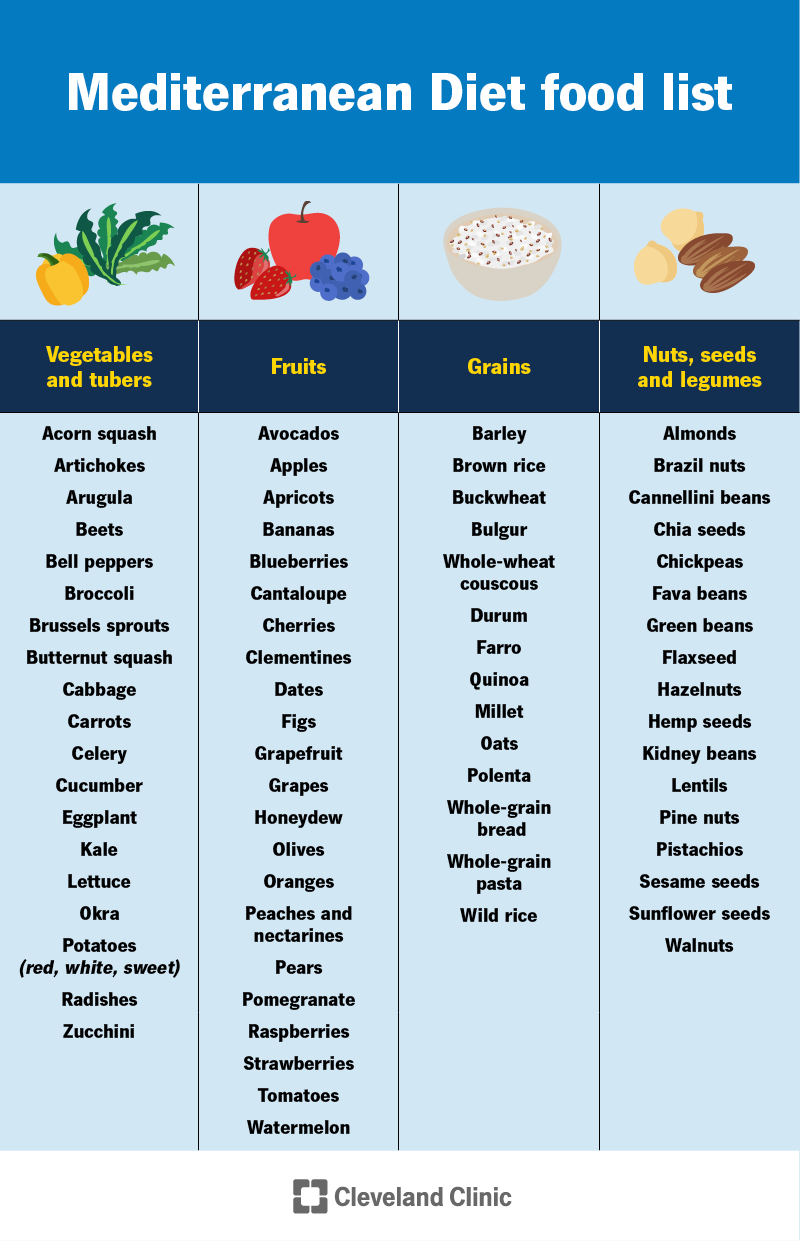
Credit: my.clevelandclinic.org
Conclusion
The Mediterranean diet offers a balanced and healthy way to eat. It focuses on fresh fruits, vegetables, whole grains, and healthy fats. Fish, poultry, and dairy appear in moderate amounts. Red meat, sweets, and processed foods stay limited. This diet supports heart health and overall well-being.
Simple, natural foods make it easy to follow. A Mediterranean eating style suits many lifestyles and tastes. Try adding its key foods to your meals today. Small changes can lead to lasting health benefits.